A regular Bali massage can feel like exactly what your body needs. After a long flight, hours on a scooter, remote work from a villa table, or a few intense days of surfing, the pressure, warmth, and relaxation may reduce tension for a while.
But if your lower back pain keeps returning, massage alone may not be enough.
This does not mean massage is bad. For many people, massage can help reduce muscle tightness, improve relaxation, and make the body feel lighter. The problem is that chronic lower back pain is often not caused by one tight muscle alone. It may involve posture habits, poor movement patterns, reduced mobility, weak supporting muscles, old injuries, nerve irritation, or the way your body reacts to daily stress.
That is why some people feel better after a massage in the evening, then wake up the next morning with the same ache.
Chronic Lower Back Pain Needs More Than Temporary Relief
Chronic lower back pain usually means the discomfort has been present for weeks, months, or keeps coming back repeatedly. It may not always feel severe, but it can affect how you sit, sleep, walk, exercise, or enjoy your time in Bali.
For travelers and expats, this can be frustrating. You may book a massage hoping the pain will finally disappear. It improves for a short time, but the pattern repeats.
The reason is simple: temporary muscle relief does not always address the reason your back is becoming overloaded in the first place.
A physiotherapy-based approach looks at how your body moves, how your spine and hips share load, how your muscles support your posture, and what activities trigger the discomfort. This can provide a clearer direction for recovery support.
The Difference Between Massage and Physiotherapy
Massage and physiotherapy can both support wellbeing, but they are not the same.
Massage is usually focused on relaxation, circulation, and reducing muscle tension. It is often passive, meaning you lie down while the therapist works on your muscles.
Physiotherapy is more assessment-based. It looks at your symptoms, movement quality, posture, strength, flexibility, mobility, and daily habits. The goal is not only to help you feel better during the session, but also to help you understand what may be contributing to the pain.
Massage Works Mainly on Soft Tissue Tension
When your lower back feels tight, massage may calm the area and reduce muscle guarding. This can be useful, especially after travel fatigue, exercise, or general stress.
However, if your pain is related to how you sit for long periods, how your hips move, how your core supports your spine, or how your body compensates after an old injury, massage may only touch one part of the problem.
Physiotherapy Looks at Movement and Function
Physiotherapy is more specific. A physiotherapist may observe how you bend, walk, squat, rotate, or sit. They may assess whether the discomfort is linked to stiffness, weakness, poor control, muscle imbalance, or movement habits.
This matters because two people can have the same lower back pain location but need different recovery strategies.
One person may need hip mobility work. Another may need core stability training. Someone else may need posture correction, nerve-related assessment, or gradual return-to-activity guidance.
Common Reasons Lower Back Pain Returns After Massage
Lower back pain can return for many reasons. In Bali, certain lifestyle and travel-related habits can make the issue more noticeable.
Long Flights and Travel Stiffness
Many visitors arrive in Bali after sitting for hours on a plane. Long flights can make the hips, lower back, and legs feel stiff. If you go straight into walking, lifting luggage, riding a scooter, or joining activities without proper recovery, your lower back may become irritated.
A massage may reduce the tight feeling, but post-flight recovery often needs gentle mobility, circulation, and movement awareness too.
Remote Work from Villas and Cafes
Digital nomads often work from beautiful spaces that are not always designed for the body. A low villa sofa, a dining chair used as an office chair, or a laptop placed too low can gradually increase back and neck strain.
If your posture keeps loading the same area every day, massage may help the tension temporarily, but the discomfort may continue until your working setup and movement habits are addressed.
Hip Stiffness and Reduced Mobility
Lower back pain is not always only about the lower back. Stiff hips can change how your spine moves. When the hips do not move well, the lower back may compensate.
This is common in people who sit a lot, travel often, lift weights, run, surf, or train without enough recovery. A physiotherapy session can help identify whether hip mobility is part of the issue.
Weak Supporting Muscles
Your lower back does not work alone. It depends on support from the core, glutes, hips, and surrounding muscles.
If these areas are not coordinating well, your lower back may take more load than it should. In this case, deep pressure from massage may feel good, but strengthening and movement control may be needed to support longer-term improvement.
Old Injuries or Repeated Strain
Some people arrive in Bali with a history of back pain, sports injury, gym strain, or previous episodes that were never fully addressed. The pain may settle, then return when the body is tired or overloaded.
Physiotherapy can help review the pattern and guide safer steps for mobility recovery and activity management.
When Lower Back Pain Needs a More Careful Approach
Not every back pain is serious, but some symptoms should be taken more carefully. If your pain is severe, worsening, linked with numbness, weakness, loss of bladder or bowel control, fever, unexplained weight loss, or a recent major accident, it is important to seek medical attention promptly.
Physiotherapy is not a replacement for emergency care or a doctor’s diagnosis when there are concerning symptoms.
For non-emergency lower back discomfort, especially pain that keeps returning, a physiotherapy assessment may help you understand what your body needs and how to move with more confidence.
What a Physiotherapy-Based Approach May Include
A physiotherapy session for lower back pain is usually more than hands-on treatment. It may include assessment, education, movement correction, and a simple recovery plan that fits your lifestyle in Bali.
Posture and Movement Assessment
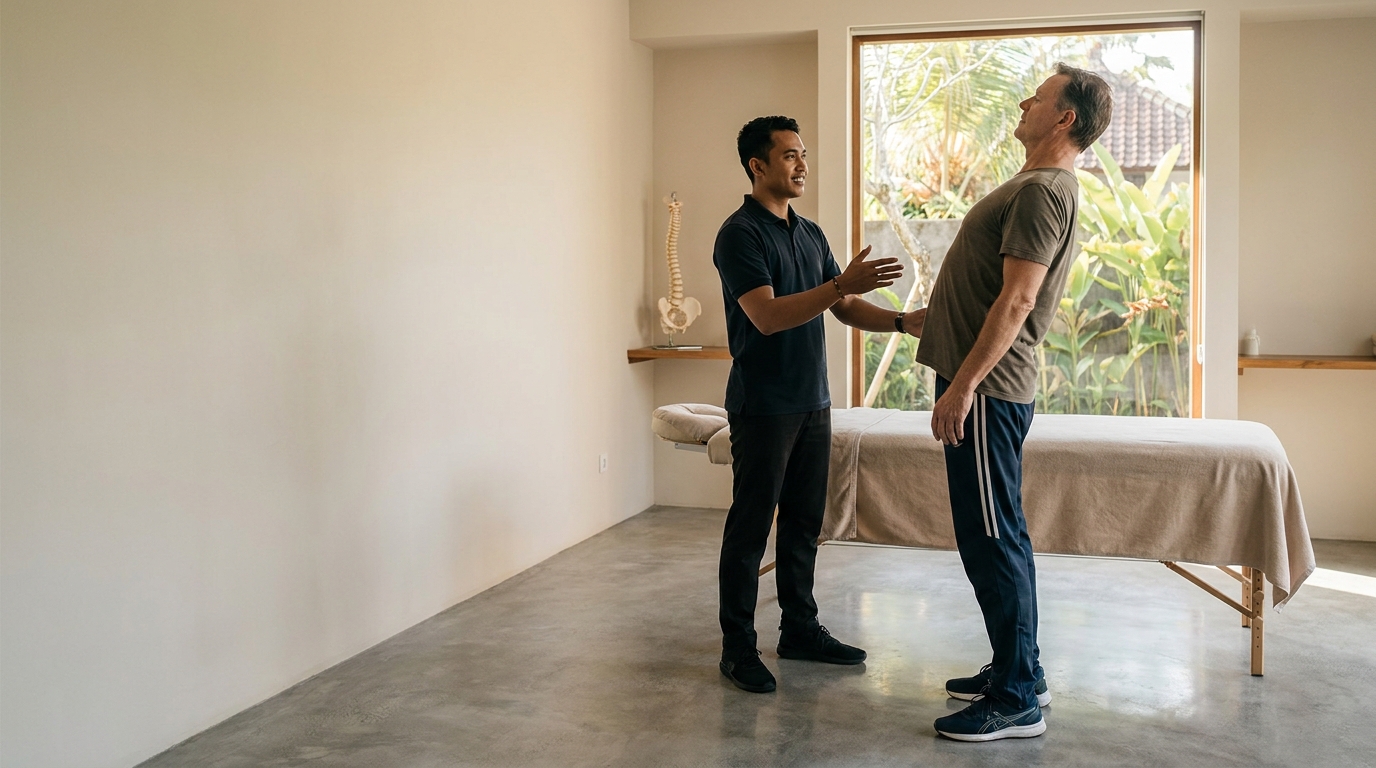
A physiotherapist may check how you sit, stand, bend, rotate, and move through daily activities. This can help identify whether your lower back is working too hard because of stiffness, poor control, or repeated habits.
For someone working remotely, posture analysis may include practical advice for laptop height, sitting position, break timing, and simple mobility exercises.
Mobility and Strength Guidance
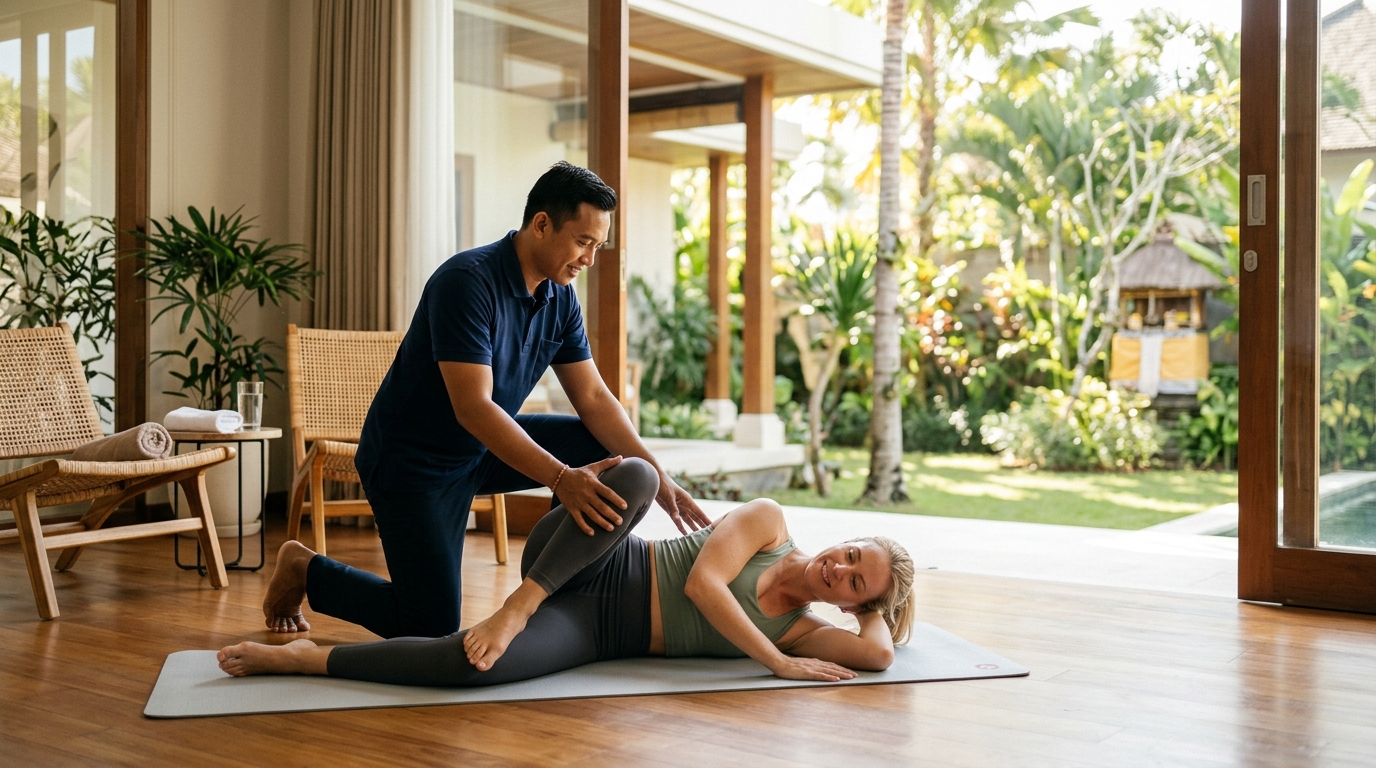
Lower back recovery often benefits from gentle, progressive movement. This may include hip mobility, spinal mobility, core activation, glute strengthening, breathing control, or guided stretches.
The key is choosing the right movement for your condition. Random exercises from the internet may not match your needs, and some may aggravate symptoms if done too early or too aggressively.
Hands-On Support When Appropriate
Physiotherapy may also include manual therapy or soft tissue techniques when suitable. The difference is that hands-on work is usually connected to an assessment and followed by movement guidance, not treated as the only solution.
This can make the session more practical for people who want to return to walking, training, working, traveling, or enjoying Bali with less discomfort.
Why In-Villa Physiotherapy Can Be Helpful in Bali
For villa guests, hotel guests, expats, and travelers, getting care in a private setting can make recovery support easier. You do not always want to travel across Bali traffic when your back is painful or stiff.
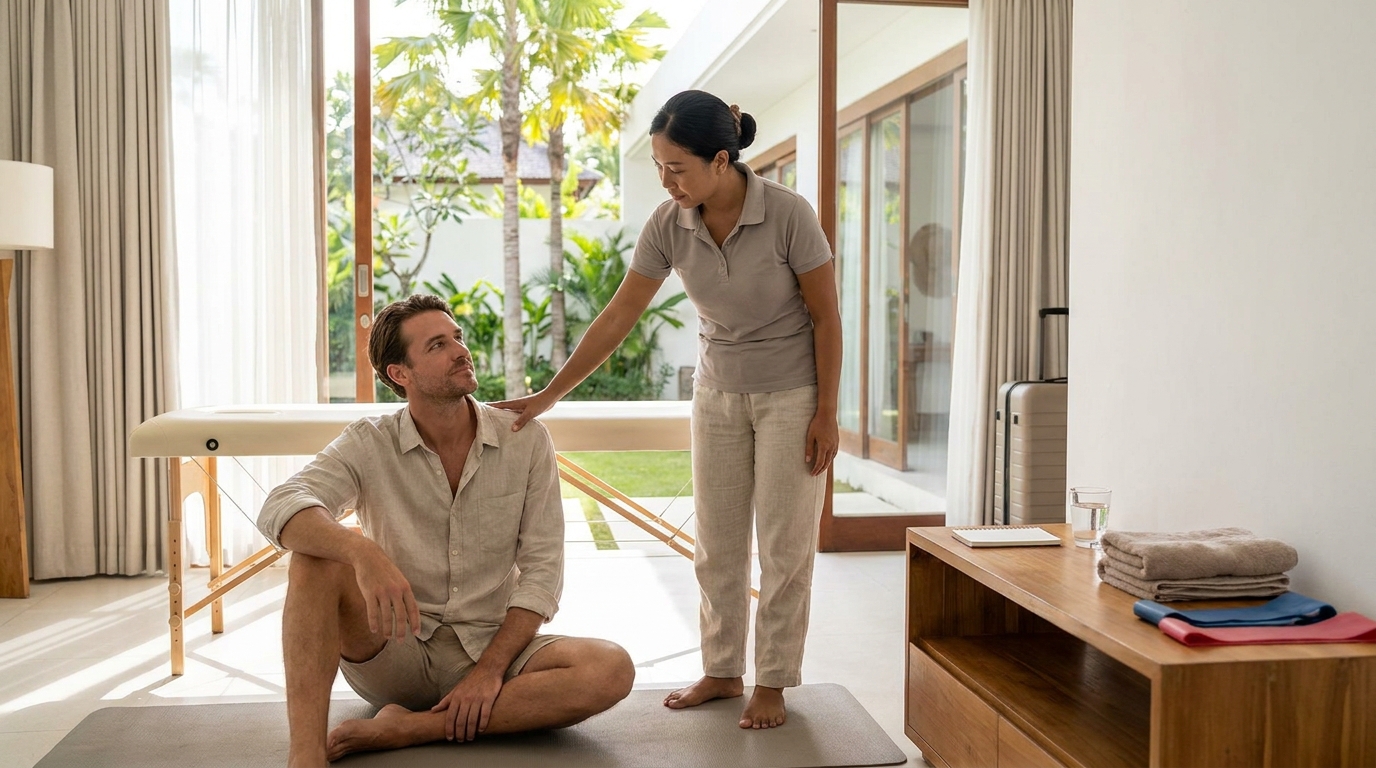
In-villa physiotherapy Bali services can be useful because the session happens where you are staying. This also allows practical recommendations based on your real environment, such as your bed, work setup, sofa, or daily movement routine.
For example, a guest with back pain after a long flight may need mobility support and recovery guidance without leaving the villa. A digital nomad may benefit from posture analysis in the exact space where they work every day. An active traveler may need advice on how to manage symptoms before returning to surfing, gym training, or long walks.
This kind of private physiotherapy Bali approach can feel more personal, calm, and relevant to real life.
Massage Can Still Be Part of Wellness, but It Should Not Be the Whole Plan
Massage can have a place in your wellness routine. It may help you relax, reduce general tension, and feel more comfortable after a busy week. In Bali, where wellness is part of the lifestyle, many people enjoy massage as part of self-care.
The important point is knowing when massage is not enough.
If your lower back pain keeps returning, spreads into the leg, affects sleep, limits movement, or makes you avoid normal activity, it may be time to look deeper. Your body may need assessment, movement guidance, and a recovery plan that goes beyond temporary relief.
A good recovery approach does not have to be complicated. Sometimes small changes in posture, mobility, strength, and daily habits can make a meaningful difference over time.
Getting Support for Lower Back Pain in Bali
If you are staying in Bali and your lower back pain keeps coming back after massage, it may be worth considering a physiotherapy-based assessment.
Rehat Sejenak Physiotherapy Rehab provides private in-villa physiotherapy, home visit physiotherapy, posture analysis, mobility support, and recovery guidance for travelers, expats, villa guests, hotel guests, and active lifestyle clients in Bali.
The goal is not to promise instant pain relief, but to help you understand your movement, support your recovery, and guide your body with a more personalized approach.
To learn more about physiotherapy support for lower back discomfort in Bali, you can visit Rehat Sejenak Physiotherapy Rehab at https://rehatphysio.com/
Final Thoughts
A Bali massage may help you feel relaxed, but chronic lower back pain often needs a clearer understanding of why the discomfort keeps returning.
If the pain is connected to posture, travel stiffness, limited mobility, weak support muscles, or repeated movement habits, physiotherapy may offer a more practical path. It combines assessment, education, hands-on support when appropriate, and personalized movement guidance.
For travelers, expats, digital nomads, and villa guests, this can be especially useful. Bali should be a place where your body feels supported, not where recurring pain quietly limits your days.