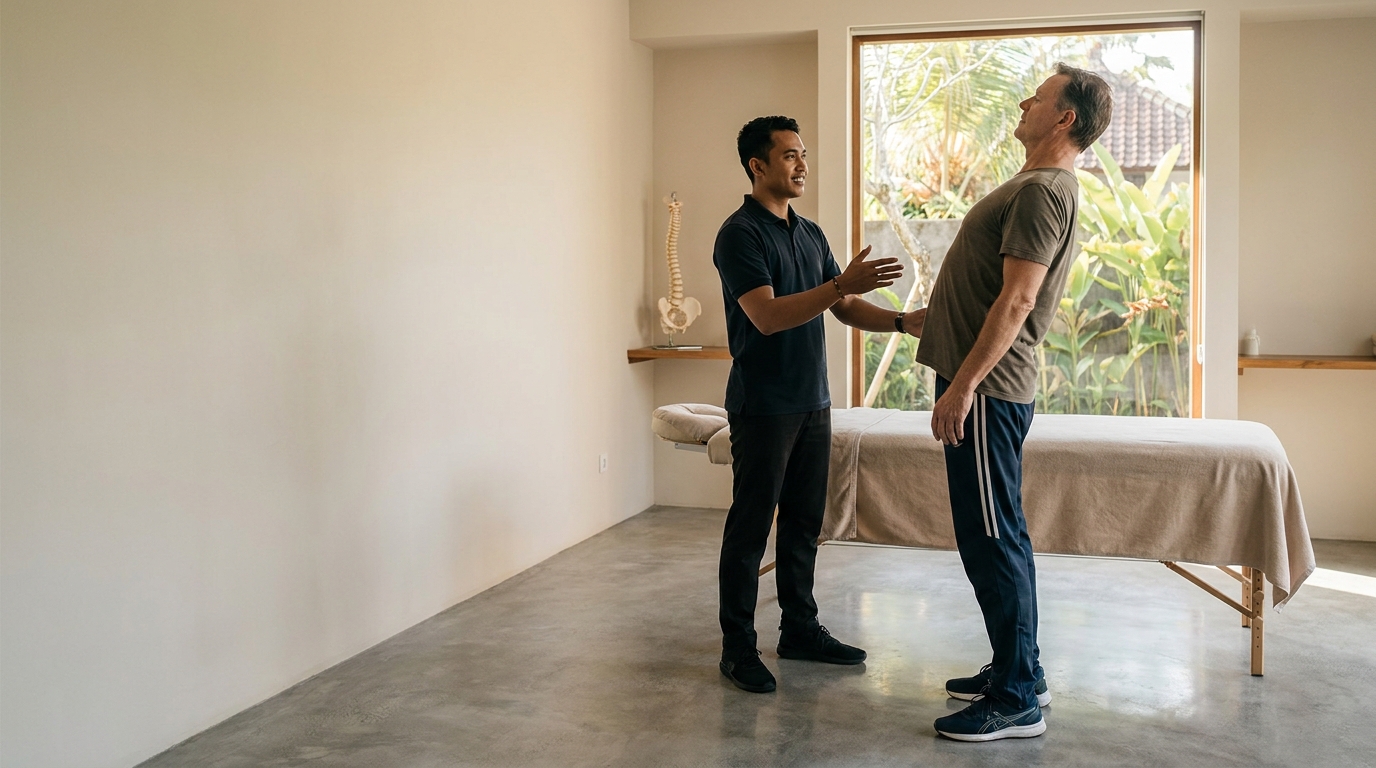
An ankle sprain in Bali can happen faster than most travelers expect. A small misstep on villa stairs, uneven pavement, a beach path, a scooter parking area, or during a hike can suddenly turn a normal day into a painful one. At first, it may feel like something you can simply “walk off,” but ignoring swelling, pain, or instability can make the recovery process more difficult.
For travelers, expats, digital nomads, and active visitors, ankle pain is more than a small inconvenience. It can affect walking, sightseeing, surfing, yoga, gym sessions, work meetings, and even basic movement around a villa or hotel. The good news is that early care, proper load management, and physiotherapy-based guidance may help support recovery and reduce the chance of making the injury worse.
What Usually Happens During an Ankle Sprain
An ankle sprain happens when the ligaments around the ankle are stretched or injured. This often occurs when the foot rolls inward or outward suddenly. In Bali, this can happen during everyday situations: stepping off a curb, walking on wet tiles, moving around a pool area, hiking on uneven ground, or playing sports after a long flight.
The most common signs include pain around the ankle, swelling, tenderness, bruising, stiffness, and difficulty putting weight on the foot. Some people can still walk, but the ankle may feel weak or unstable. Others may feel sharp pain immediately and need to stop moving.
Not every ankle sprain is the same. Some are mild and improve with careful management. Others may involve more significant ligament injury, joint irritation, or even a fracture. That is why it is important to pay attention to how your ankle feels in the first few hours and days.
Why Travelers Should Not Ignore an Ankle Sprain
Many travelers try to push through ankle pain because they do not want to lose holiday time. It is understandable. You may have tours booked, dinner reservations, surf lessons, yoga classes, or only a few days left in Bali. But continuing to walk long distances on a painful ankle may increase swelling, delay recovery, and affect how you move.
When the ankle is painful, the body often compensates. You may start limping, shifting weight to one side, or tightening the calf, knee, hip, and lower back without realizing it. Over time, this can create discomfort in other areas, especially if you are already tired from travel, long flights, or poor sleep.
For digital nomads and expats, an ankle sprain can also affect daily routines. Simple activities like walking to a café, using stairs, standing during work calls, or going to the gym may become uncomfortable. Early support helps you understand what you should avoid, what you can still do safely, and how to move with better awareness.
What To Do First After Spraining Your Ankle in Bali
The first step is to reduce unnecessary stress on the injured ankle. Stop the activity that caused the pain and avoid testing the ankle repeatedly. Many people twist their ankle and then keep rotating or jumping on it to “check” whether it is okay. This can irritate the area further.
Rest does not always mean doing nothing for days. It means avoiding movements that increase pain, swelling, or instability. Gentle movement may be helpful later, but the timing depends on the severity of the injury.
Elevating the foot can help manage swelling, especially during the first stage. If you are staying in a villa or hotel, lie down and place the ankle slightly higher than the body when possible. A cold pack may also help reduce discomfort in the early stage, but it should be wrapped in a towel and used carefully to avoid skin irritation.
Compression may be useful for some people, but it should not feel too tight. If your toes become numb, cold, or discolored, the compression is too strong and should be loosened.
When An Ankle Sprain Needs Medical Attention
Physiotherapy can support many ankle sprain recovery plans, but some situations need medical assessment first. You should consider seeing a doctor or urgent medical provider if you cannot put weight on the foot, the pain is severe, the swelling is significant, the ankle looks deformed, there is numbness, or you suspect a fracture.
You should also be more cautious if the pain does not improve, if bruising spreads quickly, or if the ankle feels very unstable. A proper medical check may be needed to rule out more serious injury.
For travelers, it can be tempting to wait and see, especially when you are in a new country. But getting the right assessment early can help you make safer decisions about walking, tours, sports, or travel plans. Physiotherapy should not replace emergency care when signs suggest a more serious injury.
How Physiotherapy May Support Ankle Sprain Recovery
Physiotherapy for ankle sprain is not only about reducing pain. It also looks at movement, balance, strength, walking pattern, swelling, stiffness, and confidence in using the ankle again. After an ankle injury, many people feel hesitant to put weight on the foot even when the pain starts to improve.
A physiotherapy-based approach may include gentle mobility work, guided loading, ankle strengthening, balance exercises, walking advice, and education about what activities to avoid temporarily. The goal is to support recovery in a way that fits the person’s condition, lifestyle, and travel situation.
For example, a traveler who twisted an ankle while walking around Ubud may need advice for stairs, villa movement, and light walking. A surfer or active guest may need guidance before returning to board sports, beach walks, or gym training. A digital nomad may need a plan that allows them to keep working while managing swelling and stiffness.
Movement Assessment Helps You Understand The Injury Better
A movement assessment can help identify how the ankle responds to weight-bearing, walking, balance, and simple range of motion. It can also show whether other areas, such as the calf, knee, hip, or lower back, are compensating.
This matters because ankle recovery is rarely just about the ankle itself. If you limp for several days, other parts of the body may start working harder. A calm, structured assessment can help you move more confidently and avoid guessing what is safe.
Recovery Guidance Should Match Your Bali Routine
Recovery advice should be realistic. A traveler staying in a private villa has different needs from someone walking around busy streets every day. A hotel guest may need guidance for stairs, pool areas, and short walks. A retreat guest may want to know whether yoga, stretching, or light movement is still appropriate.
Good recovery support considers where you are staying, how much you need to walk, your pain level, your activity goals, and your travel schedule. This makes the plan easier to follow and less stressful.
What To Avoid After An Ankle Sprain
One common mistake is returning to activity too quickly because the pain feels slightly better. Pain can reduce before the ankle has fully regained strength, balance, and stability. This is why some people sprain the same ankle again shortly after the first injury.
Avoid long walks, running, jumping, hiking, beach sports, or unstable surfaces if these increase pain or swelling. Be careful with stairs, wet tiles, and sandals with poor support. Bali has many beautiful places to explore, but uneven paths and slippery surfaces can challenge an injured ankle.
Another mistake is doing aggressive stretching too early. If the ankle is swollen and irritated, forcing movement may not help. Gentle, guided mobility is usually safer than pushing through pain.
Massage around the area should also be approached carefully. Some soft tissue work may feel helpful, but deep pressure on a fresh injury can irritate sensitive tissue. When in doubt, it is better to get proper guidance rather than trying random treatments.
Returning To Walking, Sports, And Travel Activities
Returning to normal movement should be gradual. A good sign is being able to walk with less pain, less swelling, and better control. However, walking around a villa is not the same as walking for hours through tourist areas or joining a full-day tour.
If your ankle feels more swollen at night after activity, it may be a sign that you did too much. Recovery often needs adjustment. You may need shorter walking sessions, more rest breaks, better footwear, or a simple home exercise plan.
For active travelers, return to sport should be handled with extra care. Surfing, running, tennis, hiking, gym training, and yoga all place different demands on the ankle. Balance, strength, and reaction control are important before returning to higher intensity movement. Physiotherapy may help guide this process with exercises that match your activity level.
Private Physiotherapy Can Be Helpful During Your Stay
When you are injured while traveling, convenience matters. You may not want to spend time moving between clinics, waiting in traffic, or walking more than necessary on a painful ankle. This is where private physiotherapy in Bali can be useful, especially for villa guests, hotel guests, expats, and travelers with limited mobility.
Home visit physiotherapy allows you to receive assessment and recovery guidance in a familiar setting. The physiotherapist can also understand your environment more clearly, such as stairs, room layout, walking distance, or daily movement needs. This makes the advice more practical.
Private care may also feel more comfortable if you are recovering during a holiday or work trip. You can ask questions, understand your limits, and receive a plan that fits your schedule without feeling rushed.
Supporting Recovery Without Rushing The Process
An ankle sprain can be frustrating, especially when it interrupts your time in Bali. But recovery should not be rushed just because your schedule is full. The early decisions you make can affect how the ankle feels over the next few days or weeks.
You do not need to panic after every ankle twist. But you should take swelling, pain, bruising, and instability seriously. Rest from aggravating activity, monitor symptoms, seek medical help when needed, and consider physiotherapy when you need structured movement guidance.
If your ankle sprain is affecting your ability to walk, move around your villa, join activities, or return to sport comfortably, Rehat Sejenak Physiotherapy Rehab offers private physiotherapy support in Bali with a focus on movement assessment, mobility recovery, and practical recovery guidance. You can learn more or arrange care through https://rehatphysio.com/
Final Thoughts For Travelers With Ankle Sprain In Bali
An ankle sprain in Bali does not always mean your trip is ruined, but it should be managed carefully. The safest approach is to listen to your symptoms, avoid pushing through pain, and get the right support when the ankle does not feel stable or comfortable.
For travelers, expats, and active guests, recovery is not only about reducing pain. It is about walking better, moving with confidence, and returning to daily activities with better awareness. A physiotherapy-based approach may help you understand your ankle, manage movement more safely, and support recovery while you continue your stay in Bali.