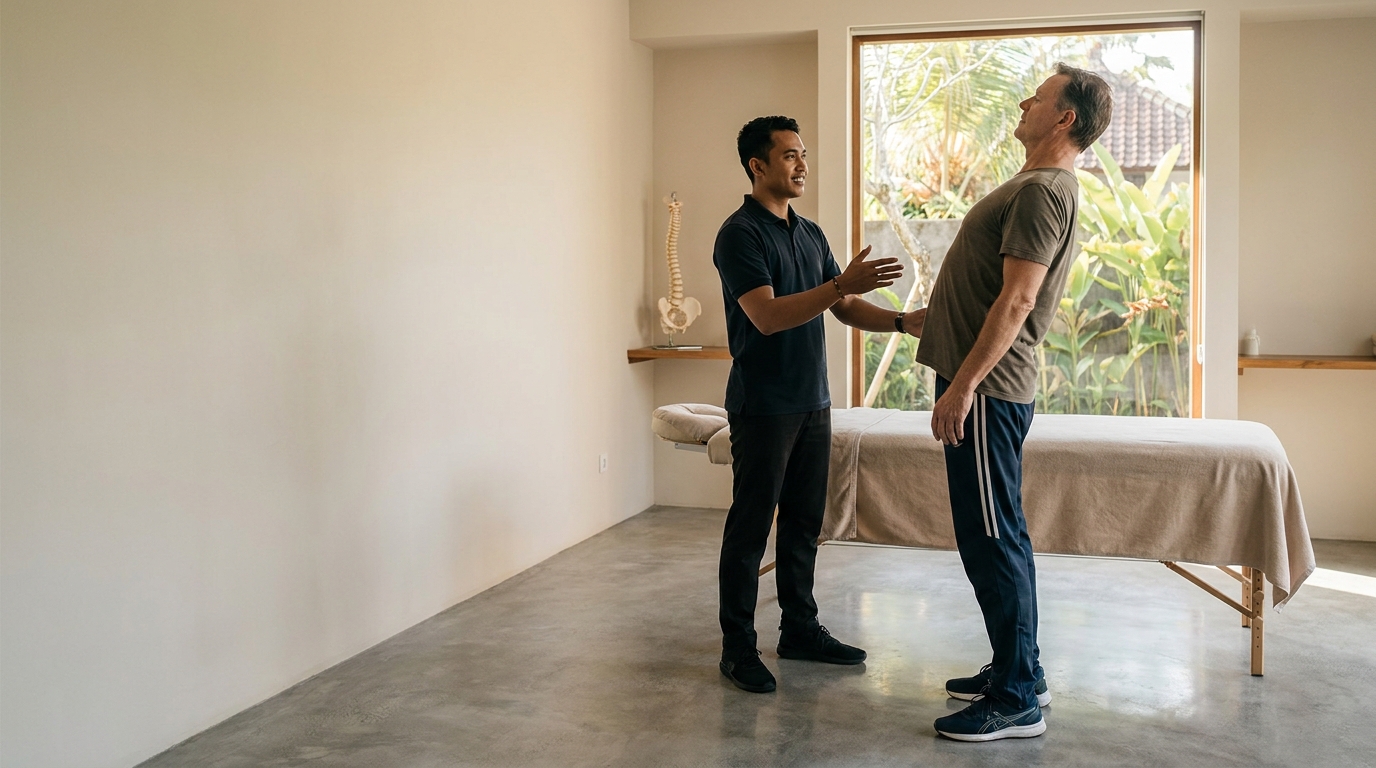
Surfing in Bali is one of those experiences many travelers look forward to before they even arrive. Warm water, beautiful beaches, and long days outdoors make it easy to spend more time in the ocean than planned.
But after a surf session, some people notice shoulder pain that does not feel like normal tiredness. It may start as a dull ache after paddling, a sharp discomfort when lifting the arm, or stiffness that becomes more obvious later at the villa or hotel.
Shoulder pain after surfing in Bali is quite common, especially for visitors who are not used to repeated paddling movements, long flights, desk work, or sudden increases in physical activity. In many cases, the discomfort is manageable with rest and better movement awareness. However, some symptoms may be a sign that your shoulder needs a proper physiotherapy assessment.
Why Shoulder Pain Can Happen After Surfing
Surfing places a lot of demand on the shoulder. Even before standing on the board, your shoulders are already working hard during paddling. The repeated overhead movement, combined with wave impact, balance corrections, and sudden arm positions, can irritate muscles, tendons, and joints.
For travelers in Bali, the shoulder may already be under stress before surfing begins. Long flights can leave the neck, upper back, and shoulders stiff. Carrying luggage, sleeping in a different bed, working remotely from a laptop, or spending hours on a scooter can also affect posture and shoulder mechanics.
When the body is tired or stiff, the shoulder may compensate during paddling. Instead of moving smoothly with support from the upper back, shoulder blade, and core, the joint may take more load than it should.
Paddling Can Overload the Shoulder
Paddling requires repeated shoulder rotation, arm lifting, and pulling through the water. If you surf for longer than your body is prepared for, the muscles around the shoulder can become fatigued.
Fatigue can reduce control. When this happens, the shoulder may move less efficiently, especially during repeated strokes. This can lead to soreness, tightness, or discomfort around the front, side, or back of the shoulder.
Posture Plays a Bigger Role Than Many People Realize
Many surfers focus only on the shoulder itself, but posture can strongly influence how the shoulder feels. A stiff upper back, rounded shoulders, or tight chest muscles may change the way the shoulder blade moves.
This is especially relevant for digital nomads and remote workers in Bali. If you spend several hours a day working from a laptop in a villa, café, or hotel room, your neck and upper back may already be tense before you enter the water.
When posture and shoulder mobility are limited, paddling can feel heavier and less comfortable.
Is It Normal Soreness or Something More?
Some shoulder soreness after surfing can be normal, especially if you are new to surfing or returning after a long break. Muscle soreness usually feels like a general ache or tightness, often appearing several hours after activity or the next day.
This type of soreness often improves gradually with rest, gentle movement, hydration, and avoiding activities that increase discomfort.
However, pain that feels sharp, limiting, or unusual should not be ignored. The goal is not to panic, but to notice how your shoulder behaves over the next 24 to 72 hours.
Signs It May Be More Than Regular Muscle Soreness
You may want to book a physiotherapy session if your shoulder pain does not settle with rest, keeps returning after each surf session, or affects simple daily movements.
For example, it may be difficult to lift your arm overhead, reach behind your back, carry a backpack, push up from the bed, or paddle without discomfort. Some people also notice pain when sleeping on the affected side.
If the shoulder feels weak, unstable, or painful during specific movements, a physiotherapy-based assessment can help identify what may be contributing to the problem.
When to Seek Medical Care First
Physiotherapy can support many movement-related shoulder issues, but it is not a replacement for urgent medical care.
If your shoulder pain follows a major fall, collision, dislocation, visible swelling, severe weakness, numbness, fever, chest pain, or significant loss of movement, it is safer to seek medical attention first. A doctor may need to rule out conditions that require medical imaging, medication, or further treatment.
For less urgent but persistent pain, physiotherapy may be a helpful next step.
Common Shoulder Issues Surfers May Experience
Shoulder pain after surfing can come from different causes. A proper assessment is important because two people can feel pain in the same area for different reasons.
Some surfers may experience irritation from repeated paddling. Others may have tightness from posture, limited shoulder blade control, or reduced upper back mobility. There may also be muscle strain after an awkward wipeout or sudden pull from a wave.
In many cases, the pain is not caused by one single movement. It may build up from a combination of travel fatigue, poor recovery, sudden activity increase, and repeated shoulder loading.
Front Shoulder Pain
Pain at the front of the shoulder may appear during paddling, push-up movements, or reaching forward. This can sometimes relate to overuse, muscle imbalance, or irritation around the structures that help control shoulder movement.
It is important not to self-diagnose from location alone. A physiotherapist will usually look at your shoulder movement, neck, upper back, shoulder blade control, and activity history before giving guidance.
Shoulder Blade and Upper Back Tension
Some people describe their pain as tightness around the shoulder blade rather than inside the shoulder joint. This can happen when the upper back and neck are working too hard to support paddling and posture.
Long flights, laptop work, and poor sleep can make this tension more noticeable. A posture analysis and mobility assessment may help identify whether the shoulder is being affected by stiffness elsewhere in the body.
When to Book a Physiotherapy Session in Bali
You do not need to wait until the pain becomes severe before speaking with a physiotherapist. In fact, early assessment may help you understand what to avoid, what to modify, and how to move with better awareness.
Consider booking a physiotherapy session if your shoulder pain lasts more than a few days, limits your surfing, affects your sleep, or makes normal movement uncomfortable. It may also be useful if you plan to keep surfing during your stay in Bali and want guidance on safer activity modification.
For expats, digital nomads, and active travelers, shoulder pain can also interfere with daily routines. Working on a laptop, driving a scooter, carrying bags, or joining fitness classes may become uncomfortable if the shoulder is not moving well.
Physiotherapy can help assess the bigger picture, not only the painful area.
What a Physiotherapy Session May Include
A physiotherapy session for shoulder pain after surfing usually starts with a conversation about your symptoms, activity level, surfing experience, travel schedule, and how the pain behaves.
The physiotherapist may observe how you move your shoulder, neck, upper back, and shoulder blade. They may also look at posture, mobility, muscle control, and movements related to paddling or pushing up on the surfboard.
The goal is to understand what may be contributing to the discomfort and provide practical guidance that fits your situation.
Movement Assessment and Mobility Support
A movement assessment may help identify whether your shoulder is lacking mobility, control, or support from surrounding areas. If your upper back is stiff or your shoulder blade is not moving smoothly, your shoulder may need to work harder during paddling.
Mobility support may include guided movements, gentle exercises, stretching strategies, and advice on how to reduce irritation while staying active.
Recovery Guidance for Surfing and Daily Activity
Physiotherapy is not only about treatment during the session. It also includes education about what to do after the session.
This may involve adjusting surf frequency, reducing paddling volume, warming up properly, improving posture during laptop work, or choosing exercises that support shoulder recovery without overloading the area.
For travelers, the guidance should be realistic. A good plan should consider your villa stay, hotel room setup, planned activities, and how long you are in Bali.
Simple Ways to Support Shoulder Recovery After Surfing
If your pain is mild and does not involve serious symptoms, a few practical steps may help reduce unnecessary strain.
Take a break from repeated paddling for a short period and notice whether the pain improves. Avoid pushing through sharp pain, especially if your movement becomes limited. Gentle shoulder and upper back movement may feel better than complete stiffness, but the movement should stay comfortable.
Pay attention to your laptop posture if you are working remotely. Try not to spend long hours with your shoulders rounded forward. Changing position regularly, supporting your arms, and taking short movement breaks can make a difference.
Sleep position also matters. If lying on the painful shoulder increases discomfort, try sleeping on the other side or on your back with pillow support.
These steps are not a substitute for a proper assessment, but they can help you avoid making the irritation worse while deciding whether to seek support.
Why Private In-Villa Physiotherapy Can Be Helpful in Bali
For many travelers and expats, convenience matters. Shoulder pain can make it uncomfortable to travel across town, sit in traffic, or arrange transport after a long day.
Private in-villa physiotherapy in Bali allows you to receive assessment and recovery support in a familiar setting, whether you are staying in a villa, hotel, or private residence. This can be especially helpful if you are managing pain after surfing, recovering between activities, or balancing work and travel.
Home visit physiotherapy also makes it easier for the physiotherapist to understand your real environment. They may notice your work setup, sleeping position, daily movement habits, or recovery limitations that could be contributing to your shoulder discomfort.
Getting Back to Surfing With Better Awareness
Most people do not want to stop surfing completely, especially during a Bali trip. The more useful question is often: what can you do safely right now, and what should you modify until the shoulder feels more reliable?
A physiotherapy-based approach can help you understand your current movement capacity and build a more realistic return-to-activity plan. This may include reducing session length, improving warm-up habits, working on shoulder blade control, and gradually rebuilding paddling tolerance.
Recovery is not always instant, and every shoulder responds differently. But with the right guidance, you can make better decisions and reduce the chance of repeatedly irritating the same area.
When Shoulder Pain Should Not Be Ignored
Shoulder pain after surfing is easy to dismiss at first. Many people assume it will disappear on its own, especially if they are on holiday and do not want to interrupt their plans.
But if the pain keeps returning, affects sleep, limits arm movement, or makes daily activities uncomfortable, it is worth paying attention. The earlier you understand the problem, the easier it may be to adjust your activity and support recovery.
If you are in Bali and dealing with shoulder pain after surfing, Rehat Sejenak Physiotherapy Rehab provides private physiotherapy support for sports-related discomfort, movement assessment, shoulder mobility, and recovery guidance. You can learn more or arrange an in-villa physiotherapy session through https://rehatphysio.com/ when you feel your shoulder needs professional attention without having to leave your villa or hotel unnecessarily.
Final Thoughts
Surfing can be a beautiful part of your Bali experience, but shoulder pain should not be ignored when it starts affecting movement, comfort, or confidence in the water.
Not every ache needs treatment, but persistent or limiting pain deserves a thoughtful assessment. Physiotherapy may help you understand what your shoulder needs, improve movement awareness, and support a safer return to the activities you enjoy.
Whether you are a traveler, expat, digital nomad, or local client in Bali, listening to your body early can make recovery feel more manageable.