Bali is a place where many people come to rest, move, explore, work remotely, or recover from a busy lifestyle. Some visitors arrive after long international flights with stiff hips, tight backs, swollen legs, or neck discomfort. Others are staying in villas for wellness retreats, surf trips, yoga programs, or family holidays. For expats and digital nomads, daily life may involve long hours at a laptop, scooter rides, gym training, or active weekends.
In this kind of setting, visiting a clinic is not always the most practical option. Traffic, unfamiliar roads, limited time, privacy concerns, or discomfort while moving can make it harder to get the care you need. This is where home visit physiotherapy in Bali can be a helpful alternative.
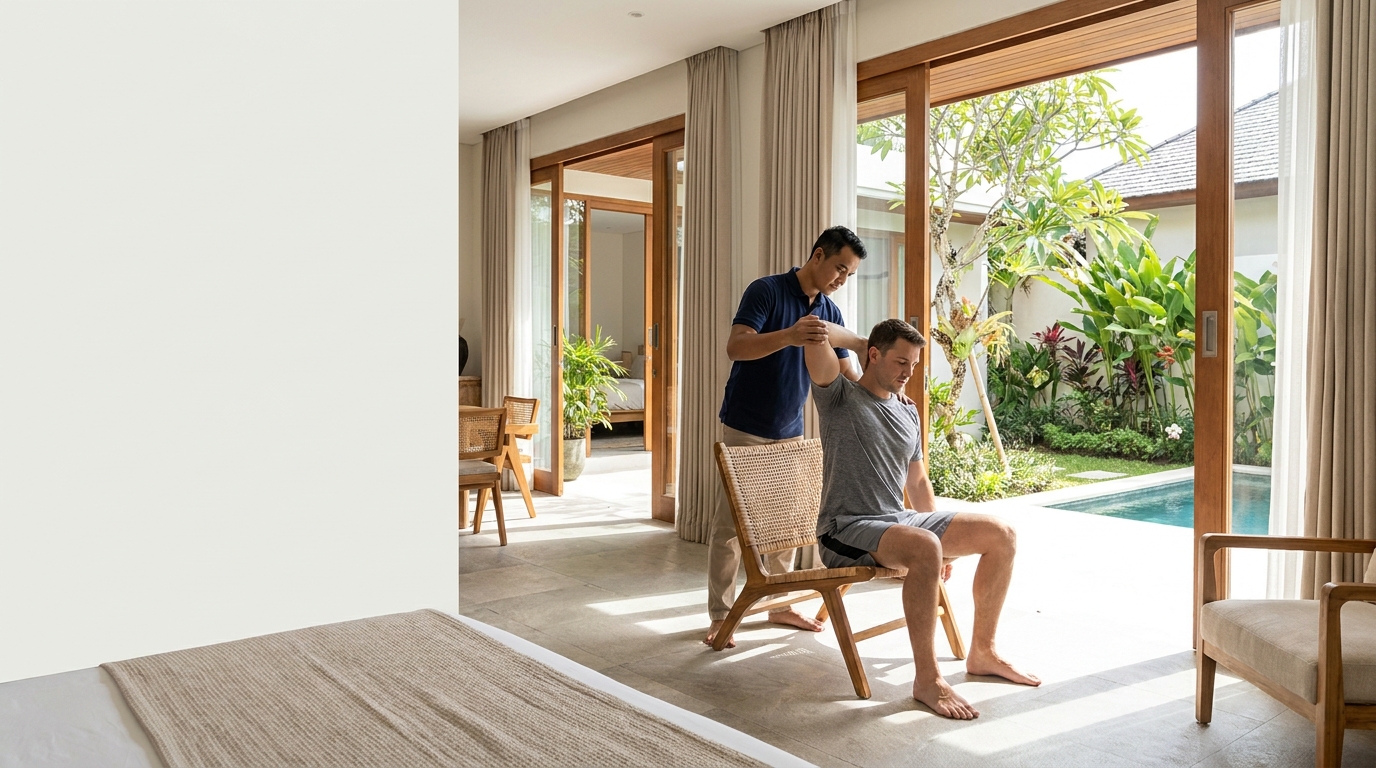
Instead of asking the client to travel, the physiotherapist comes to the villa, hotel, residence, or private accommodation. The session can be adapted to the person's space, daily routine, mobility level, and recovery goals. For many people, this creates a calmer and more personal experience.
Home Visit Physiotherapy Offers Comfort Without the Extra Travel
When your body already feels stiff, sore, or limited, traveling across Bali to attend a clinic appointment may not feel ideal. Even a short drive can be uncomfortable if you are dealing with lower back discomfort, post-flight stiffness, knee pain, shoulder tension, or a recent sports-related issue.
Home visit physiotherapy reduces the need for extra movement before and after the session. This can be especially useful for villa guests, hotel guests, older clients, people recovering from intense activity, or anyone who feels more comfortable being treated in a familiar environment.
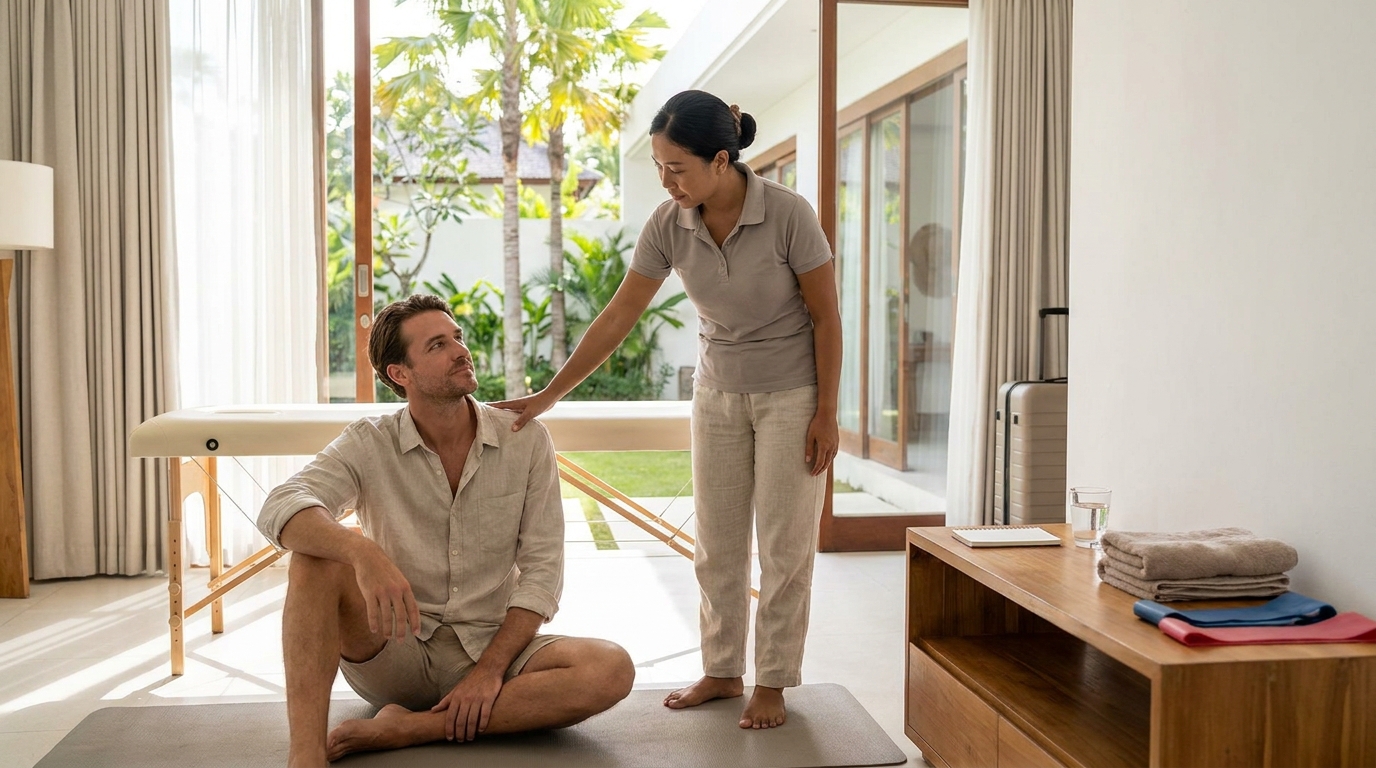
The convenience is not only about saving time. It also helps the physiotherapist see how you naturally move in your own space. Simple things such as how you sit at your work desk, how you get in and out of bed, how you walk around the villa, or how you stretch after training can provide useful information for personalized guidance.
A More Private and Personalized Care Experience
Some people feel more relaxed receiving physiotherapy in a private setting. This is common among travelers, expats, and clients staying in premium villas or wellness accommodations. A private session gives space for open discussion about symptoms, movement limitations, lifestyle habits, and recovery goals without the feeling of being rushed.
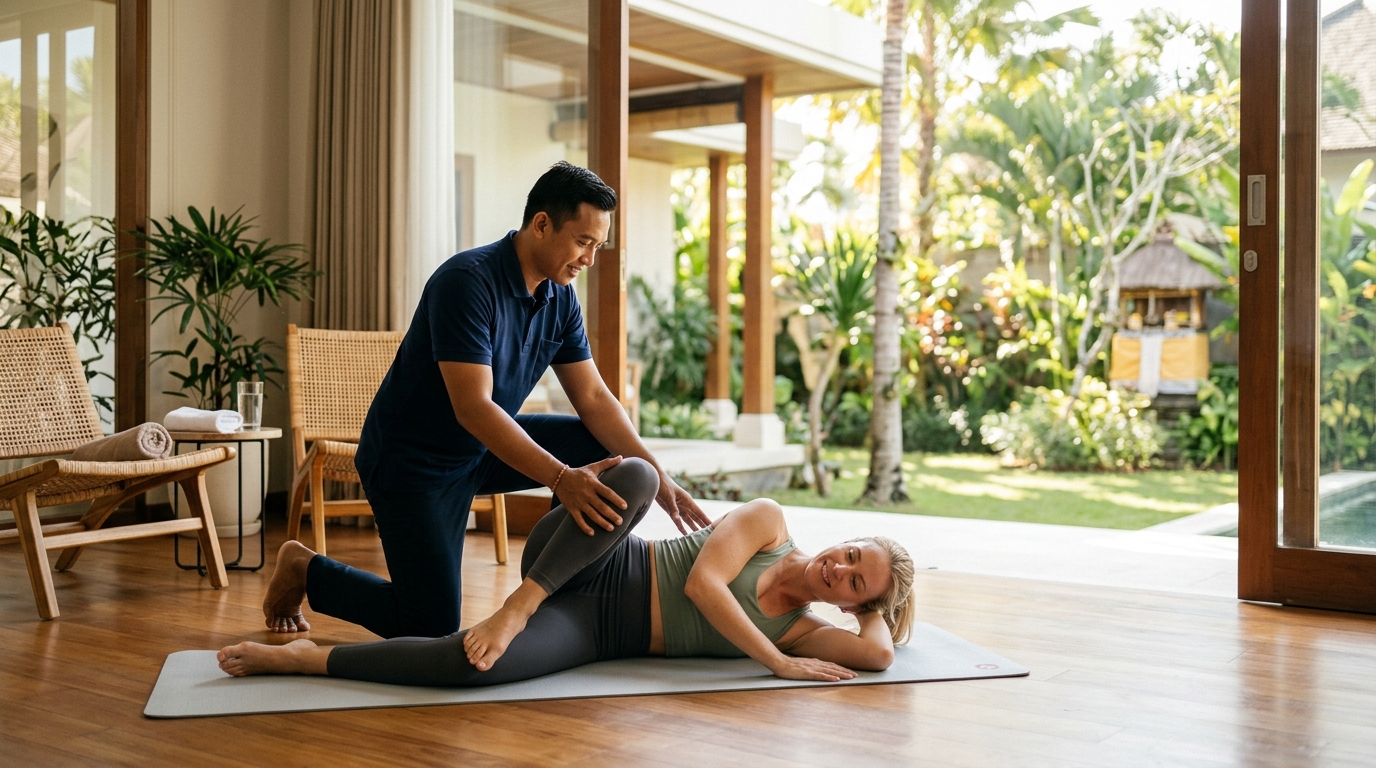
In-villa physiotherapy in Bali can also be adjusted to the person's needs on the day. For example, a client who has been sitting through long online meetings may need posture analysis, neck and shoulder mobility work, and guidance on desk setup. A surfer or tennis player may need a movement assessment and recovery support after repetitive strain. A traveler after a long-haul flight may benefit from gentle mobility work, circulation-friendly movement, and education on how to manage stiffness safely.
This type of care is not one-size-fits-all. A physiotherapy-based approach should consider your activity level, comfort, medical history, current symptoms, and what your body can tolerate during the session.
Better Fit for Travelers, Expats, and Villa Guests
Bali attracts many people who do not follow a typical daily routine. Travelers may only stay for a few days. Digital nomads may work from cafes, villas, or coworking spaces. Expats may balance family life, work, exercise, and travel around the island. Wellness retreat guests may have packed schedules with yoga, training, meditation, or outdoor activities.
For these lifestyles, flexibility matters. Home visit physiotherapy Bali services can fit more naturally into the day. A session can take place before a flight, after a long activity day, during a recovery period, or between work commitments.
For villa and hotel guests, this can also feel more practical than searching for a nearby clinic, arranging transport, and waiting in an unfamiliar place. The client can stay in a calm environment, prepare comfortably, and continue resting after the session.
Useful for Post-Flight Stiffness and Travel Fatigue
Long flights can affect the body in several ways. Sitting for many hours may contribute to hip tightness, lower back discomfort, neck tension, reduced circulation, and general body stiffness. Carrying luggage, sleeping in awkward positions, and changing time zones can make the body feel even more uncomfortable after arrival.
Physiotherapy does not replace medical care when there are serious symptoms, but it may help support movement awareness, gentle mobility, and muscle recovery after travel. A home visit session can focus on how your body is moving after the flight and what kind of exercises or strategies may be appropriate for your condition.
For many travelers, the goal is not only to feel better for one day. It is also to understand how to move safely during the rest of the trip, especially if they plan to walk, hike, surf, join a retreat, or spend long hours sightseeing.
Support for Active Lifestyles and Sports Recovery
Bali is full of activities that challenge the body. Surfing, padel, tennis, gym training, running, cycling, yoga, hiking, and water sports can all place different demands on muscles and joints. Sometimes discomfort appears after overuse, poor recovery, sudden increases in activity, or a previous injury that has not fully settled.
Private physiotherapy in Bali can be helpful for active clients who want a more focused assessment of movement, mobility, strength, and recovery habits. A physiotherapist may guide you through appropriate exercises, soft tissue techniques, mobility work, or gradual return-to-activity advice depending on your condition.
It is important to stay realistic. Physiotherapy cannot guarantee instant recovery, and some injuries may require further medical assessment. However, a personalized session may help you understand what is contributing to the issue and how to support your recovery more safely.
Helpful for Posture, Desk Work, and Remote Workers
Many people in Bali work remotely from laptops. The setting may look relaxed, but the body still feels the effects of long sitting hours, low tables, soft sofas, poor screen height, and limited movement breaks. Neck stiffness, upper back tension, wrist discomfort, hip tightness, and lower back fatigue are common complaints among remote workers and digital nomads.
A home visit physiotherapy session allows the therapist to assess the actual work setup. This can make the advice more practical. Instead of giving general posture tips, the physiotherapist can look at how you sit, where your laptop is placed, how often you move, and what simple adjustments may help.
Posture analysis is not about forcing the body into a perfect position all day. It is more about awareness, variety, strength, mobility, and building habits that your body can tolerate better.
When a Clinic Visit May Still Be Necessary
Home visit physiotherapy can be very useful, but it is not the right answer for every situation. If you have severe pain after a fall, suspected fracture, sudden weakness, chest pain, difficulty breathing, signs of infection, unexplained swelling, or neurological symptoms, it is important to seek urgent medical attention or consult a doctor.
A responsible physiotherapy service should know when to refer a client for further assessment. Physiotherapy can support recovery, movement, and function, but it should not be used as a replacement for emergency care or necessary medical diagnosis.
For non-emergency concerns such as stiffness, mobility limitation, posture-related discomfort, muscle tightness, mild sports-related issues, and recovery support, a home visit session may be a practical starting point.
What to Expect During a Home Visit Physiotherapy Session
A good session usually begins with a conversation about your symptoms, lifestyle, activity level, travel history, and goals. The physiotherapist may ask when the discomfort started, what makes it better or worse, and how it affects daily activities.
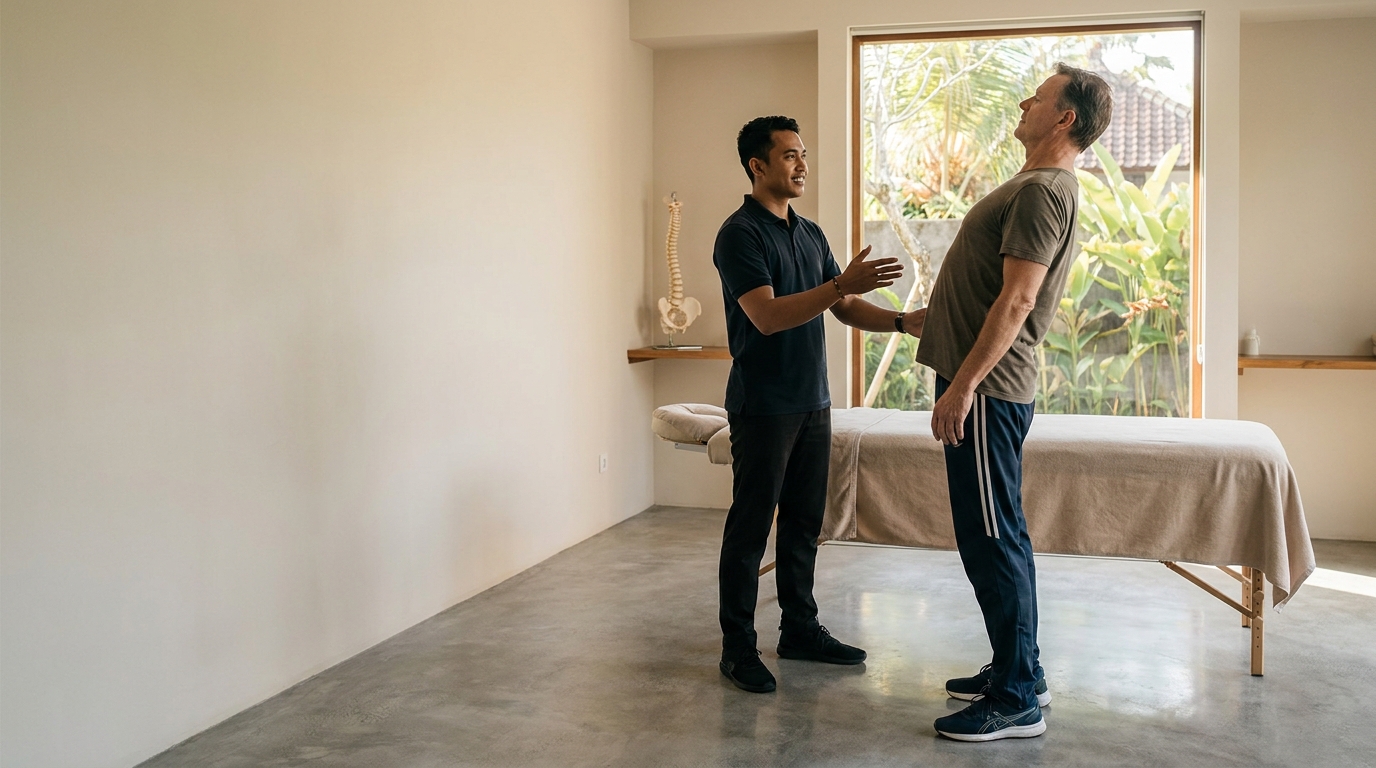
From there, the session may include movement assessment, posture observation, mobility testing, hands-on techniques when appropriate, guided exercises, breathing or relaxation strategies, and education for self-management. The exact approach depends on the client's condition and comfort level.
For villa or hotel guests, it helps to prepare a clean area with enough space to move. Comfortable clothing is recommended. If you have relevant medical records, imaging results, or previous injury information, it may be useful to share them before or during the session.
Choosing the Right Physiotherapy Option in Bali
The best choice depends on your needs. A clinic may suit people who need specific equipment, ongoing structured rehabilitation in one place, or direct access to other medical facilities. Home visit physiotherapy may suit people who value privacy, convenience, flexible scheduling, and personalized care in their own environment.
For international travelers, expats, digital nomads, wellness guests, and active clients, home visit care can feel more aligned with daily life in Bali. It reduces travel stress and allows the session to be built around the way you actually move, rest, work, and recover.
If you are staying in a villa, hotel, or private residence and want physiotherapy support without visiting a clinic, Rehat Sejenak Physiotherapy Rehab provides private home visit and in-villa physiotherapy services in Bali. The care can focus on posture analysis, mobility improvement, post-flight stiffness, sports recovery support, and general wellness guidance based on your needs. You can learn more or arrange a session through Rehat Physio Bali.
Final Thoughts
Home visit physiotherapy in Bali is not only about convenience. It is about receiving care in a setting that feels calm, private, and relevant to your daily movement. For many people, especially travelers and expats, this makes the recovery process easier to start and easier to follow.
Whether you are managing travel stiffness, posture-related discomfort, muscle tightness, or recovery after activity, a physiotherapy-based approach can help you understand your body better and take more informed steps toward improved movement and comfort.