Bali is a global destination for active travelers, athletes, and fitness enthusiasts. From high-performance surfing in Canggu and Uluwatu to endurance running through Ubud's trails, high-intensity functional fitness gyms, CrossFit workouts, and martial arts training, the island encourages movement. However, combining intensive daily activities with tropical heat, dehydration, changes in sleep routines, and travel fatigue can significantly increase the risk of acute sports injuries and overuse conditions.
When an injury interrupts your training or vacation, waiting for pain to disappear on its own often delays recovery or leads to recurring symptoms. Professional physiotherapy provides a structured, evidence-informed approach to sports rehabilitation—helping you restore mobility, rebuild strength, and return to your sport safely without unnecessary downtime.
Common Sports Injuries Experienced by Athletes and Travelers in Bali
Different activities place distinct mechanical loads on joints, tendons, and muscle groups. Among active clients in Bali, our physiotherapists frequently assess and treat several common sports-related conditions:
Surfing Injuries: Shoulders, Lower Back, and Knees
Surfing requires repetitive overhead paddling, rapid pop-ups, and rotational trunk control. Common surfing injuries include shoulder impingement, rotator cuff tendinopathy, acute lumbar strains from prolonged hyperextension on the board, and MCL (medial collateral ligament) sprains from awkward wipeouts or heavy reef landings.
Running and Endurance Injuries
Running on Bali's uneven roads, beach sand, or jungle trails can overload the lower extremities. Frequent conditions include Achilles tendinopathy, plantar fasciitis, iliotibial (IT) band syndrome, patellofemoral pain syndrome (runner's knee), and medial tibial stress syndrome (shin splints).
Gym, CrossFit, and Functional Fitness Strains
High-volume lifting and metabolic conditioning often challenge shoulder stability, lumbar spine control, and hip mobility. Improper load management or lifting under fatigue can lead to lower back muscle spasms, sacroiliac (SI) joint irritation, shoulder capsule inflammation, and patellar tendon irritation.
Tennis and Padel Overuse Conditions
With the rapid growth of padel and tennis across Bali, players frequently experience lateral epicondylitis (tennis elbow), rotator cuff fatigue, calf strains, and ankle sprains resulting from quick lateral directional changes on hard courts.
First Aid and Early Management: What to Do Immediately After an Injury
How you manage a sports injury during the first 24 to 72 hours plays a critical role in your overall recovery timeline. For acute musculoskeletal sprains and strains, follow the evidence-based PEACE & LOVE protocol:
Protect: Unload the injured structure immediately and restrict activities that cause sharp pain or increased swelling.
Elevate: Keep the injured limb elevated higher than the heart when resting to promote fluid drainage and reduce interstitial swelling.
Avoid Anti-inflammatory Modalities in the First 24–48 Hours: Allow the natural acute inflammatory cascade to initiate tissue repair before using high-dose ice or anti-inflammatory medications.
Compress: Use light elastic taping or compression bandages to support the joint and manage local effusion.
Educate: Listen to your body and avoid forcing immediate return to high-impact training without proper functional assessment.
How Physiotherapy Supports Structured Sports Rehabilitation
Effective sports physiotherapy goes far beyond passive rest or symptom masking. At Rehat Physio Bali, our clinical rehabilitation process focuses on understanding your root movement mechanics and restoring load capacity safely:
1. Comprehensive Biomechanical and Movement Assessment
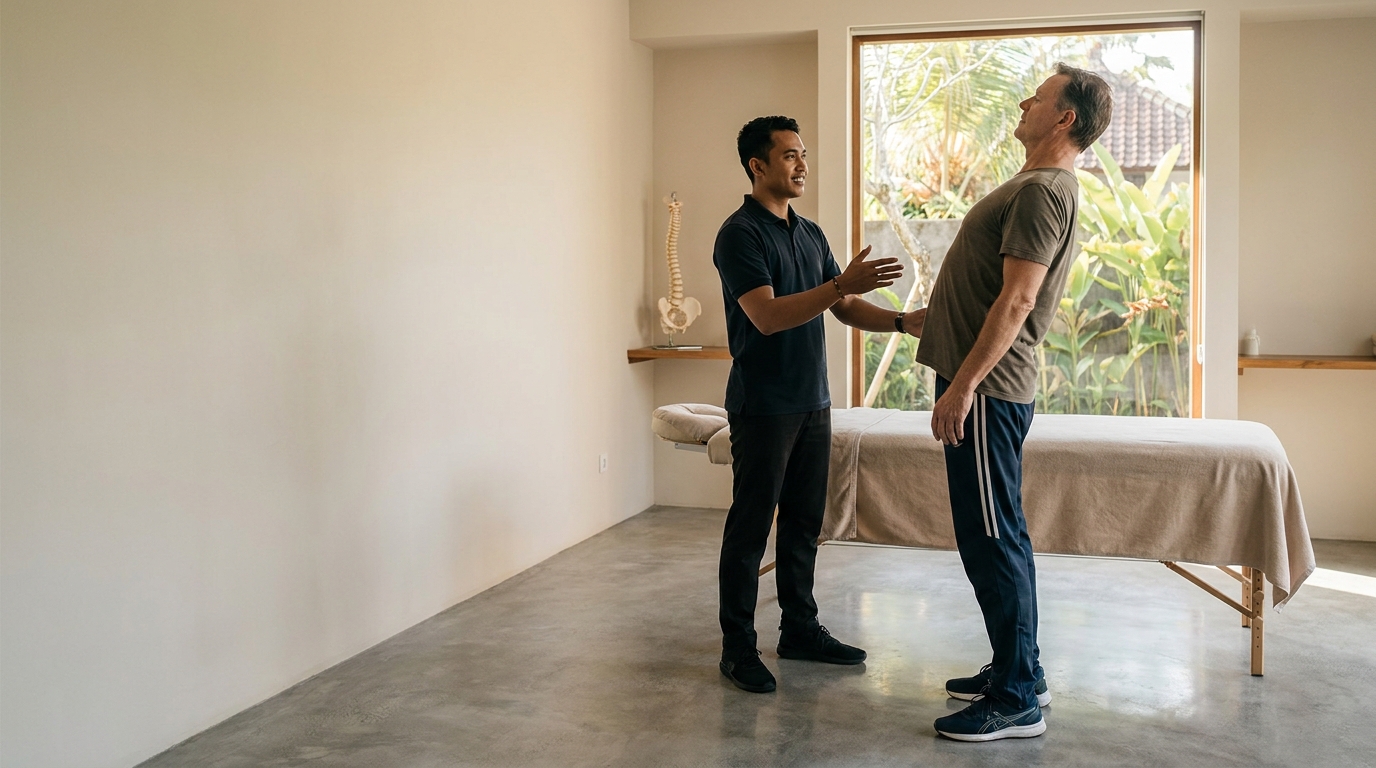
Your physiotherapist evaluates joint range of motion, muscle strength deficits, ligament stability, and movement patterns specific to your sport. We identify whether your injury stemmed from sudden acute overload, tissue fatigue, or underlying mobility restrictions.
2. Targeted Manual Therapy and Symptom Relief
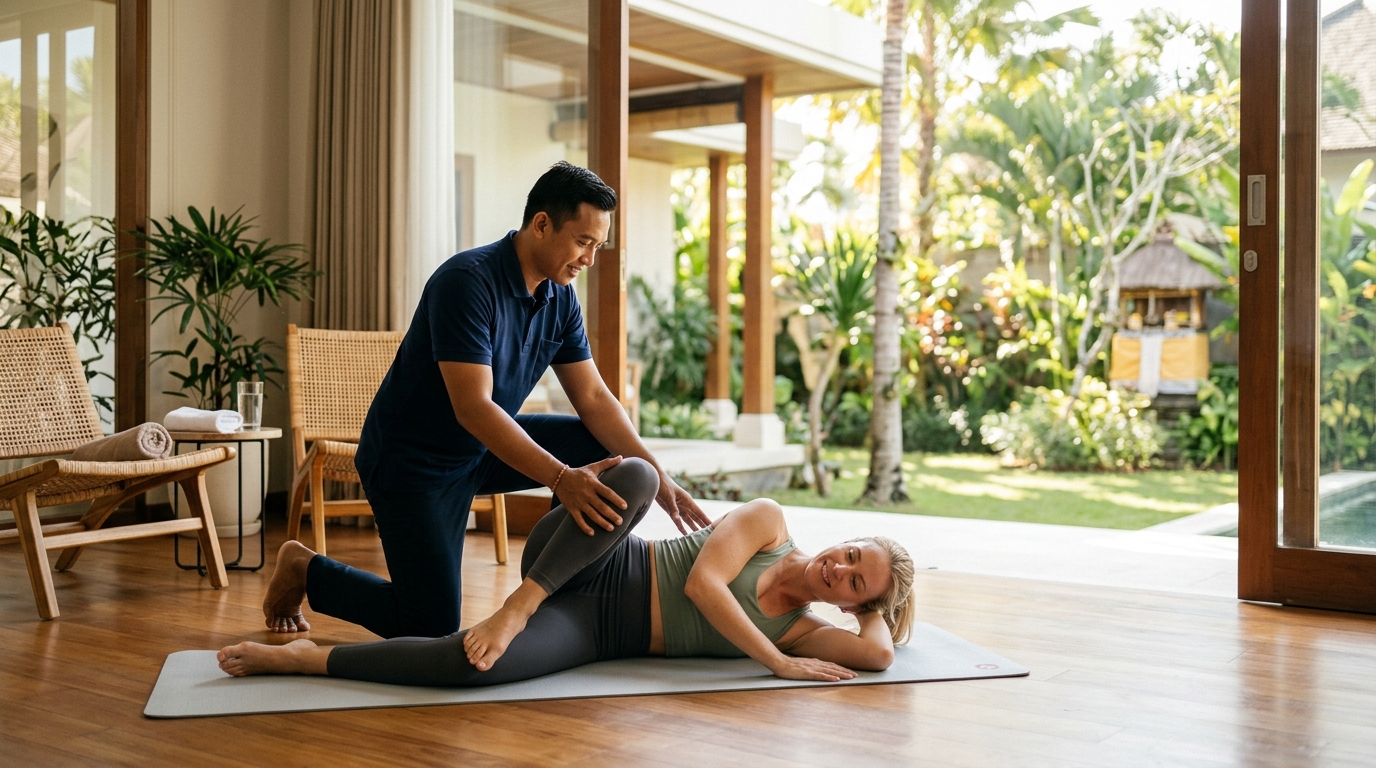
When pain or protective muscle spasm restricts movement, clinically indicated hands-on techniques—such as soft tissue release, joint mobilization, and myofascial decompression—help down-regulate pain sensitivity and restore comfortable mobility.
3. Progressive Load Management and Exercise Prescription
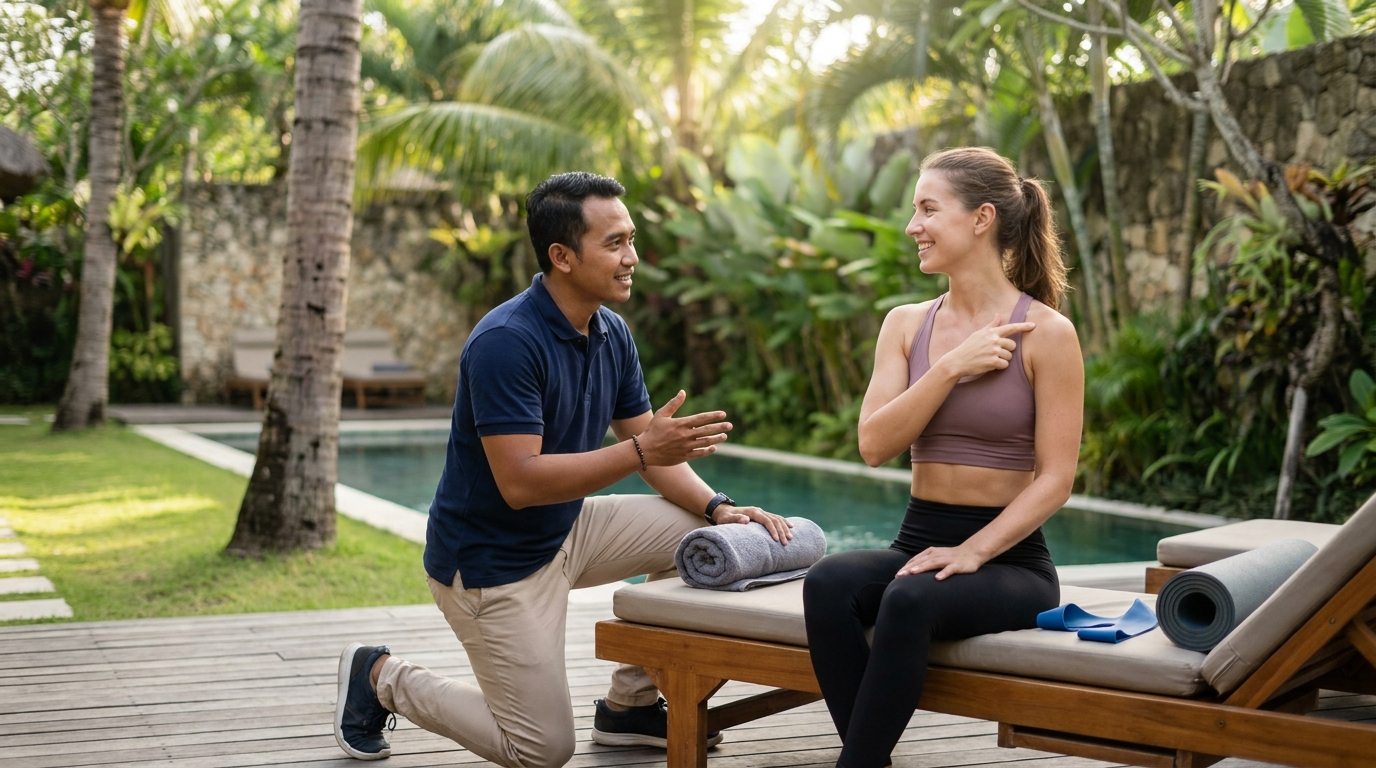
Complete rest is rarely the best long-term strategy for sports injuries. Guided progressive loading stimulates collagen synthesis and strengthens tendons, ligaments, and muscle fibers. Your therapist designs a tailored exercise program involving isometric holds, eccentric strengthening, and functional neuromuscular control.
4. Sport-Specific Return-to-Activity Planning
Before you return to the waves, court, or gym floor, we test your dynamic balance, agility, power absorption, and sport-specific movement tolerance to minimize the risk of re-injury.
Why In-Villa Physiotherapy is Ideal for Sports Recovery in Bali
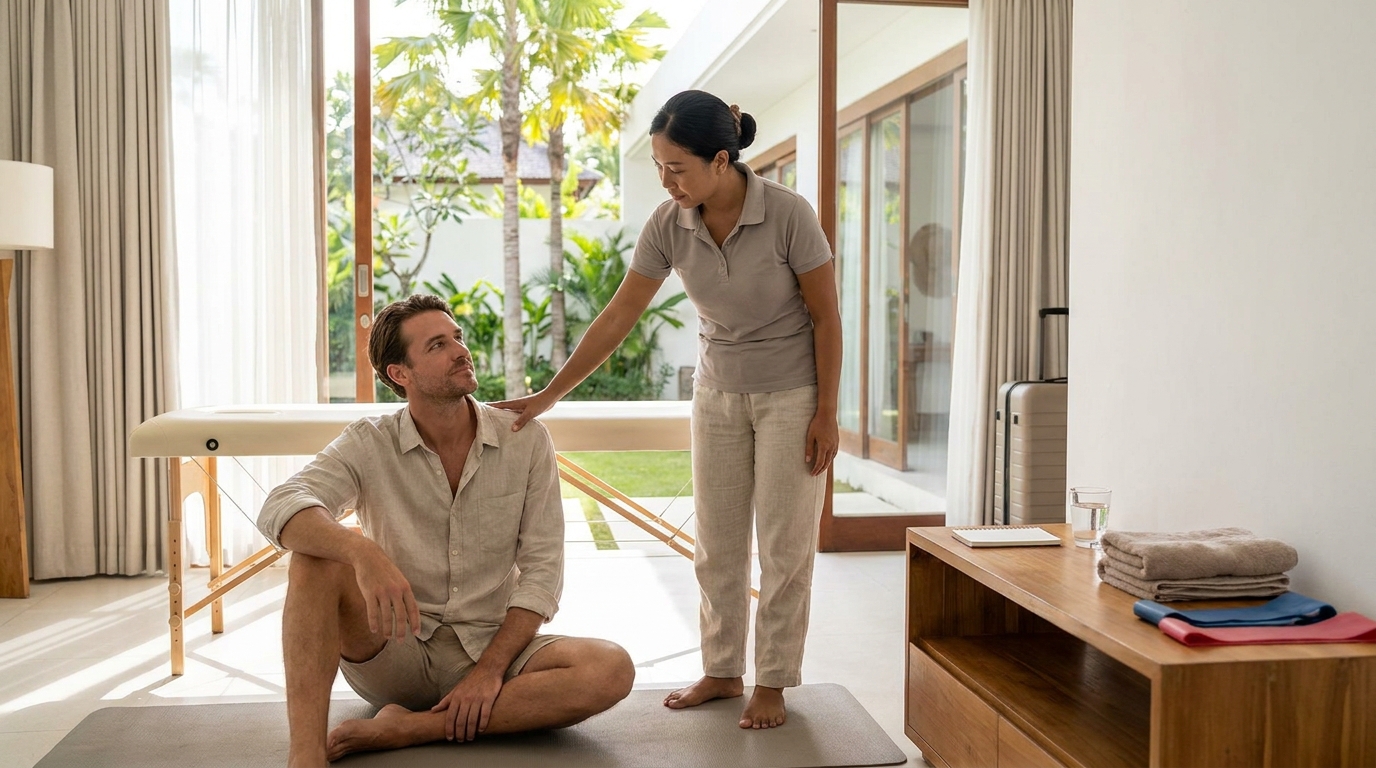
When you are dealing with an acute ankle sprain, severe lower back spasm, or shoulder pain, traveling through heavy Bali traffic to a clinic can be uncomfortable and inconvenient. Our in-villa physiotherapy service brings professional sports rehabilitation directly to your villa, hotel, or private residence.
Whether you are staying in Canggu, Uluwatu, Seminyak, Sanur, Denpasar, or Ubud, a qualified physiotherapist arrives with the necessary diagnostic and rehabilitation equipment. You receive focused, unhurried 1-on-1 care in a private environment, allowing you to rest and recover immediately after your session.
Final Thoughts: Don't Let an Injury End Your Bali Experience
An acute injury or nagging overuse strain does not have to ruin your time in Bali. With accurate clinical assessment, smart load management, and progressive rehabilitation, you can rebuild strength and return to your favorite activities safely.
If you are experiencing pain or limitation after sports or training, explore our sports injury recovery service or contact Rehat Physio Bali today to schedule a private in-villa consultation.