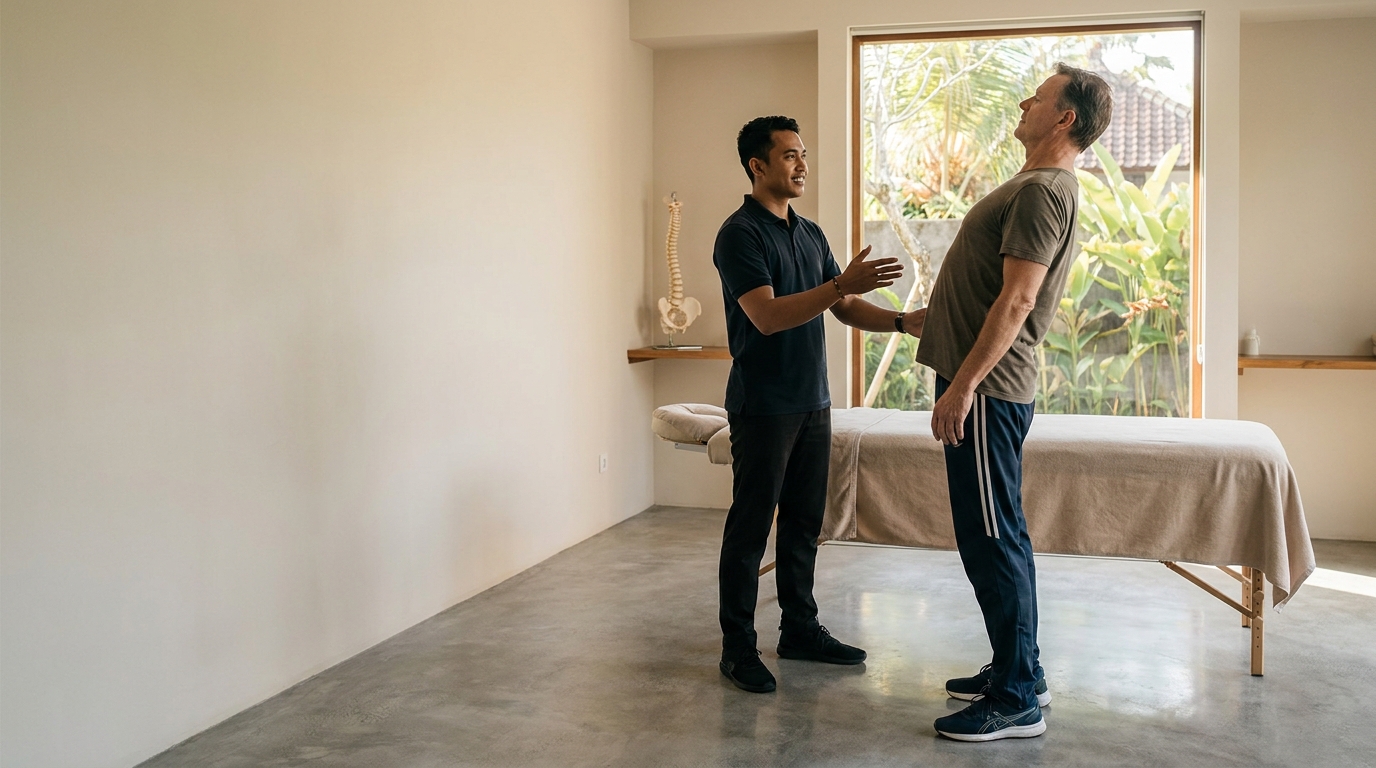
When back pain, neck stiffness, a sports injury, or limited mobility interrupts daily life, you may come across three different professionals: a physiotherapist, a chiropractor, and an osteopath. Their work can overlap, which makes the choice confusing, especially when every clinic describes its approach differently.
The simplest answer is that no profession is automatically the best for every person or condition. The right choice depends on your symptoms, goals, medical history, the practitioner's training, and whether the proposed plan is safe and appropriate. This guide explains the common differences without presenting one profession as a universal solution.
The Short Version
Physiotherapists generally focus on restoring movement, function, strength, and independence through assessment, education, exercise, rehabilitation, and hands-on care when appropriate. Chiropractors commonly focus on musculoskeletal problems, particularly the spine, and often use spinal or joint manipulation as part of treatment. Osteopaths typically use a patient-centred musculoskeletal approach that may combine manual techniques with movement, posture, exercise, and lifestyle advice.
These are broad descriptions rather than rigid boundaries. A physiotherapist may have advanced manual therapy training. A chiropractor may prescribe exercise and load management. An osteopath may use a rehabilitation-focused plan. The individual practitioner's reasoning, communication, and willingness to refer can matter as much as the title on the door.
What Does a Physiotherapist Do?
Physiotherapy is a healthcare profession concerned with movement and function across the lifespan. According to World Physiotherapy, physiotherapists assess people, make clinical judgements, plan and deliver treatment, evaluate outcomes, support self-management, and refer to other healthcare professionals when needed.
A physiotherapist's work is not limited to back pain or sports injuries. Depending on education and area of practice, physiotherapy may support:
Muscle, joint, tendon, and ligament conditions
Sports injury recovery and return-to-activity planning
Mobility and strength after surgery
Stroke and neurological rehabilitation
Balance, falls prevention, and elderly mobility
Cardiorespiratory, pelvic health, and other specialist needs
A musculoskeletal physiotherapy session may include a medical and activity history, movement testing, strength assessment, functional tasks, education, therapeutic exercise, load management, and manual therapy when indicated. The aim is usually not only to change how you feel during the appointment, but also to improve what you can do between appointments and after treatment ends.
What Does a Chiropractor Do?
Chiropractic is commonly associated with the assessment and management of musculoskeletal problems, especially those involving the spine. Treatment often includes manual therapy and spinal manipulation or an "adjustment," where a practitioner applies a controlled force to a joint. Chiropractors may also use stretching, soft-tissue techniques, exercise, and lifestyle advice.
The US National Center for Complementary and Integrative Health describes chiropractic as a licensed healthcare profession in the United States that commonly treats musculoskeletal problems. Education and regulation are country-specific, so the same title does not necessarily indicate identical training or legal scope everywhere.
Spinal manipulation is not exclusive to chiropractors. Appropriately trained physiotherapists, osteopathic practitioners, and some medical professionals may also use manipulation. What differs is how central that technique is to the overall treatment model and what other components are included in the plan.
What Does an Osteopath Do?
Osteopathy is generally a patient-centred approach to assessing and managing musculoskeletal conditions. Osteopaths commonly consider how joints, muscles, daily activities, previous injuries, and general health interact. Treatment may include joint mobilisation, manipulation, stretching, massage or soft-tissue work, exercise, posture advice, and self-management guidance.
The General Osteopathic Council, the statutory regulator in the United Kingdom, describes osteopathy as focusing on the diagnosis, treatment, prevention, and rehabilitation of musculoskeletal disorders. Other countries may define or regulate osteopathic practice differently.
It is also important not to confuse an osteopath with an osteopathic physician in the United States. A US-trained Doctor of Osteopathic Medicine, or DO, is a fully licensed medical doctor. That role is different from non-medical osteopathic practice in many other countries.
Where the Three Professions Overlap
Physiotherapists, chiropractors, and osteopaths may all work with back pain, neck pain, muscle tension, joint stiffness, and some sports-related problems. Depending on the practitioner, all three may use:
Health-history questions and physical examination
Movement and posture assessment
Joint mobilisation or manipulation
Soft-tissue techniques
Exercise and activity advice
Education about recovery and self-management
This overlap means that choosing by technique alone can be misleading. For example, "manual therapy" describes a category of techniques, not a profession. Likewise, hearing a joint sound during treatment does not by itself tell you whether the treatment addressed your long-term goals.
The Main Practical Differences
Overall Scope
Physiotherapy has a broad rehabilitation scope that can include musculoskeletal, neurological, post-operative, cardiorespiratory, paediatric, elderly, and other specialist care. Chiropractic and osteopathy are more commonly centred on musculoskeletal complaints, although individual scopes vary.
Typical Treatment Emphasis
Physiotherapy commonly places strong emphasis on exercise progression, function, load tolerance, and returning to daily activity or sport. Chiropractic treatment often places greater emphasis on spinal and joint manipulation. Osteopathy often places greater emphasis on hands-on musculoskeletal assessment and manual treatment within a whole-person context.
Follow-Up Goals
A rehabilitation-focused plan should include measurable goals. Examples include walking farther, returning to surfing, lifting safely, improving balance, or tolerating work without repeated flare-ups. Regardless of profession, you should understand what is being measured, how treatment will progress, and when the plan will be reviewed.
Regulation and Qualifications
Professional titles, education, registration, and permitted scope differ between countries. In Indonesia, physiotherapy is recognised as a health service delivered by physiotherapists, and healthcare professionals are subject to registration and practice-licensing requirements. When booking any musculoskeletal service in Bali, ask about the practitioner's formal qualification, professional registration, local permission to practise, and experience with your condition.
Which Professional Should You Choose?
A physiotherapist may be a suitable starting point when your main goal involves restoring strength, mobility, balance, walking, work capacity, sport, or function after injury, surgery, or neurological illness. Physiotherapy may also be appropriate when you want an exercise-led plan that can progress over time.
A chiropractor may suit someone seeking musculoskeletal assessment where spinal or joint manipulation is being considered as one treatment option. Ask how exercise, self-management, and reassessment fit into the plan rather than assuming repeated adjustments are the only available approach.
An osteopath may suit someone seeking a hands-on musculoskeletal assessment that considers movement, lifestyle, and multiple body regions. As with any practitioner, ask what evidence supports the proposed treatment and how progress will be measured.
If you are unsure, choose a practitioner who:
Explains the assessment and likely options clearly
Discusses benefits, limitations, alternatives, and relevant risks
Does not promise a guaranteed cure or instant permanent correction
Provides a plan connected to your actual goals
Reassesses progress rather than continuing treatment automatically
Refers you to a doctor or another professional when appropriate
What About Spinal Manipulation?
Spinal manipulation can be one option for some musculoskeletal conditions, but it is not necessary for every episode of back or neck pain. Research summarised by the NCCIH suggests that it may provide modest improvement for some people with low-back pain, while results vary and it should be considered alongside other appropriate care.
Temporary soreness, stiffness, discomfort, or headache can occur after manipulation. Serious complications are rare, but people with certain medical conditions may have greater risk. A practitioner should screen you carefully, explain material risks, obtain consent, and offer alternatives. Tell them about previous surgery, fractures, osteoporosis, neurological symptoms, vascular conditions, pregnancy, and all medications, particularly blood-thinning medicines.
When to Seek Medical Care First
Manual or rehabilitation care should not delay urgent medical assessment. Seek prompt medical help if symptoms involve:
Major trauma, visible deformity, or inability to bear weight
Chest pain, difficulty breathing, fainting, or sudden severe illness
Fever, unexplained weight loss, or signs of infection
New or progressive weakness, loss of coordination, or widespread numbness
Loss of bladder or bowel control, or numbness around the saddle area
A sudden unusual severe headache, dizziness, facial weakness, or speech difficulty
Pain that is rapidly worsening or does not fit a typical musculoskeletal pattern
If a practitioner dismisses serious symptoms or discourages appropriate medical assessment, seek another opinion.
Questions to Ask Before Booking in Bali
Whether you are a resident, expat, or traveler, a few questions can help you make a safer choice:
What is your professional qualification and registration?
Do you have experience with my symptoms or recovery goal?
What will the initial assessment include?
What treatment options and alternatives are available?
How will we measure progress?
When would you refer me for medical review or imaging?
What should I expect after the session?
A clear answer is more valuable than impressive terminology. Good care should help you understand the plan and participate in decisions.
Making an Informed Choice
The difference between a physiotherapist, chiropractor, and osteopath is not simply exercise versus manipulation. There is meaningful overlap, and practitioners within the same profession can work very differently. Focus on qualifications, assessment quality, informed consent, measurable goals, and whether the plan helps you become more capable and confident over time.
If your goal is to improve movement, mobility, strength, or recovery while staying in Bali, Rehat Physio Bali provides private home visit physiotherapy and in-villa physiotherapy. You can also contact us to discuss your location and whether physiotherapy is an appropriate starting point.
Sources and Further Reading
This article provides general education and does not replace an individual medical assessment or diagnosis.