Bali is a dream destination for travelers, digital nomads, and wellness seekers from around the world. However, arriving in paradise often comes after a long-haul flight—whether it is an 8-hour journey from Australia, a 15-hour flight from Europe, or a multi-stop route from North America. When you finally land at Ngurah Rai International Airport, it is common to feel stiff hips, a tight lower back, swollen lower legs, and persistent neck tension.
Understanding why travel stiffness happens is the first step toward effective recovery. Sitting in an airplane seat for extended periods keeps your hips in continuous 90-degree flexion. Over hours, this position shortens the hip flexor muscles (such as the iliopsoas) while putting the gluteal muscles into a dormant, lengthened state—a condition often referred to as "gluteal amnesia."
At the same time, prolonged sitting increases intervertebral disc pressure in your lumbar spine. Combined with cabin dehydration, reduced blood circulation, and awkward sleep postures, it is no surprise that many visitors step off the plane feeling restricted, sore, and physically fatigued.
Common Signs of Post-Flight Travel Fatigue and Muscle Restriction
Post-flight stiffness can present in different ways depending on your posture, travel duration, and previous injury history. Common symptoms travelers experience during their first few days in Bali include:
Anterior Hip Tightness: A pinching or stiff sensation at the front of the hips when standing up or walking after sitting.
Lower Back Aches: Dull, continuous discomfort across the lumbar spine or SI (sacroiliac) joint area, especially in the morning.
Glute and Hamstring Tightness: Feeling like your posterior chain is heavy, inflexible, or slow to activate during daily movement.
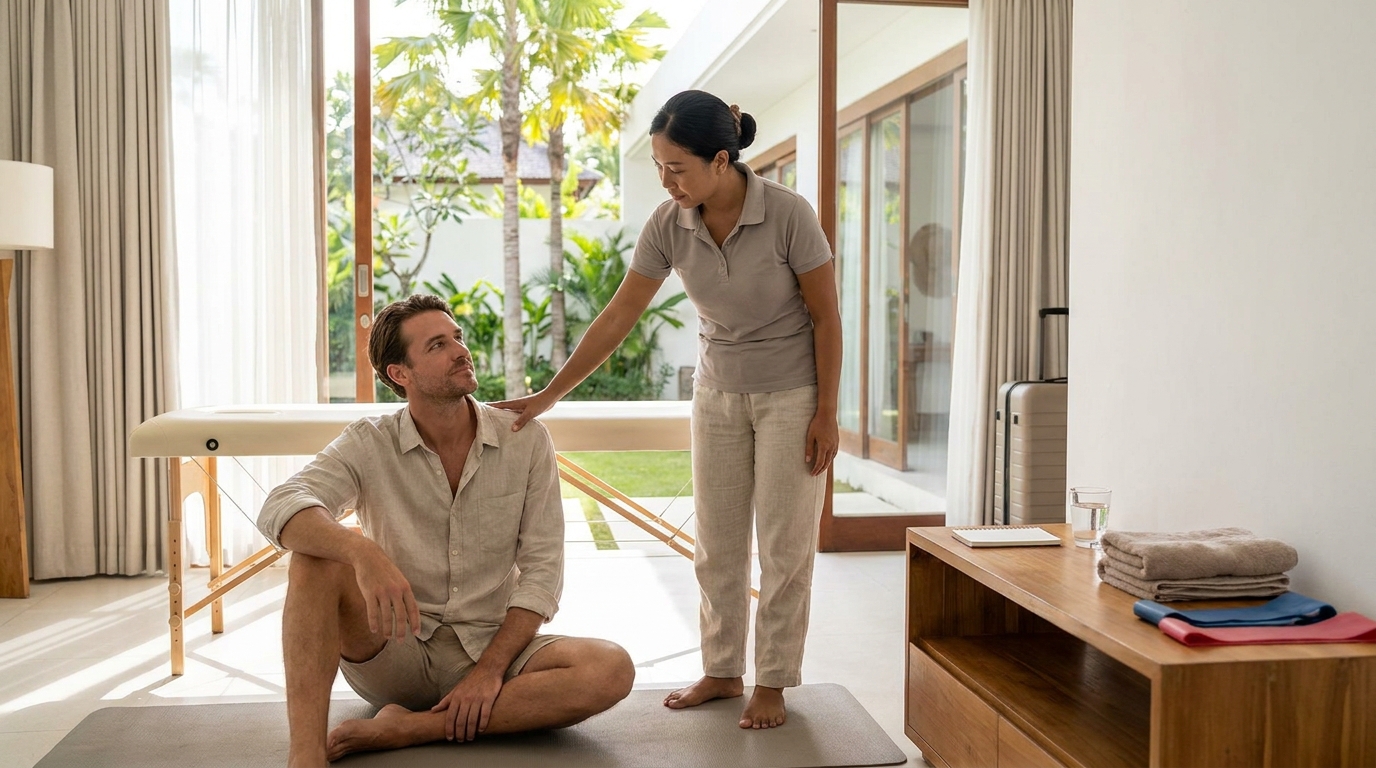
Neck and Shoulder Stiffness: Tension radiating from the upper trapezius down to the shoulder blades from resting against airplane armrests or neck pillows.
4 Physiotherapist-Approved Mobility Exercises for Your Bali Villa
Before jumping into a heavy gym workout, an intense surfing session at Canggu, or an aggressive stretching routine, your body needs gentle, restorative movement. Here are four safe, physiotherapy-led mobility exercises you can perform comfortably in your villa or hotel room after landing:
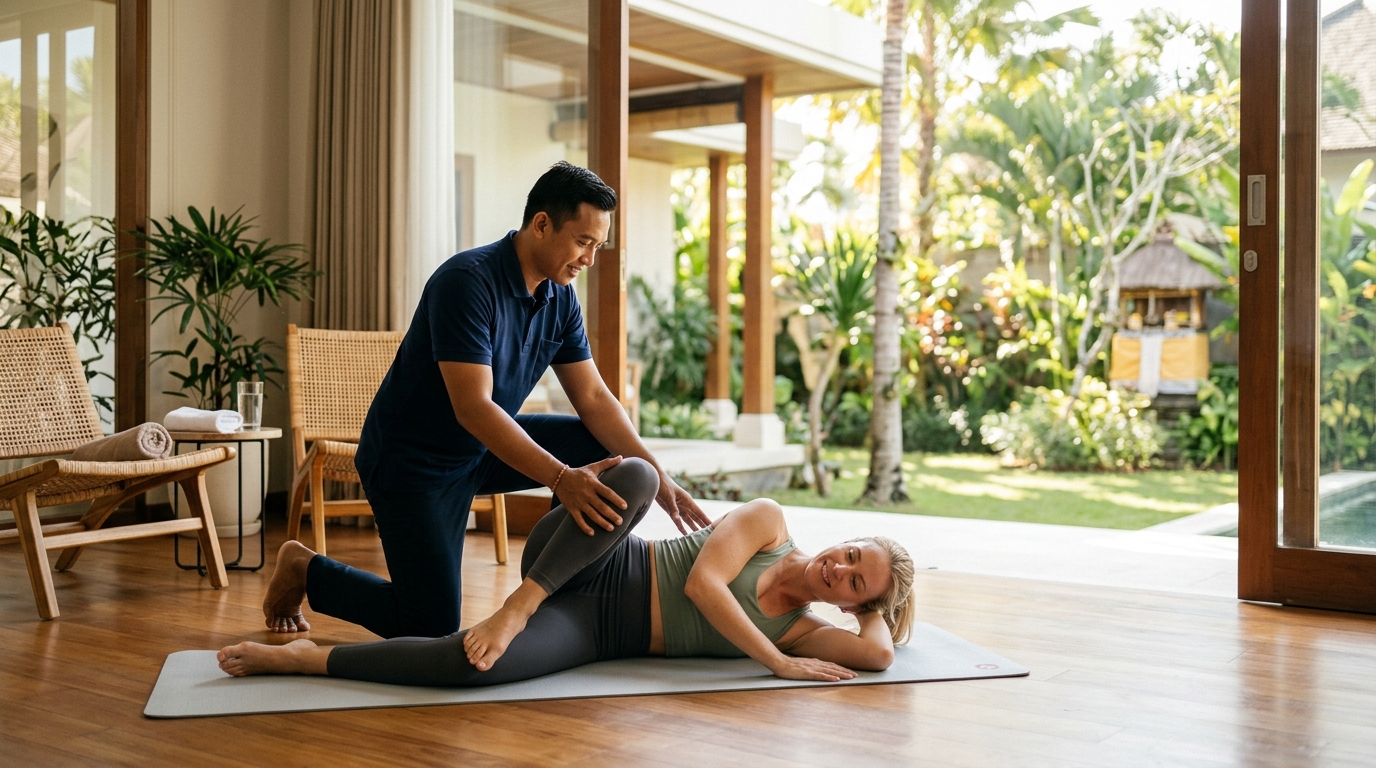
1. 90/90 Hip Rotation & Flexor Release
This exercise helps restore internal and external rotation in the hip capsule while gently opening up the tight anterior hip flexors.
How to do it: Sit on the floor with one leg bent at 90 degrees in front of you and the other leg bent at 90 degrees behind you. Sit tall through your spine and gently hinge forward over your front knee until you feel a comfortable stretch in the glute and hip. Hold for 30–45 seconds, then switch sides. Move slowly and avoid forcing any pinching sensations.
2. Supine Pelvic Tilts & Glute Bridge Activation
After hours of sitting, waking up your gluteal muscles takes pressure off your lumbar spine and helps restore pelvic alignment.
How to do it: Lie on your back with your knees bent and feet flat on the floor. First, gently flatten your lower back into the floor by tilting your pelvis backward. Next, engage your glutes and lift your hips until your thighs and torso form a straight line. Hold at the top for 3–5 seconds, then lower down slowly. Repeat 10 to 12 times.
3. Thoracic Extension & Open Book Stretch
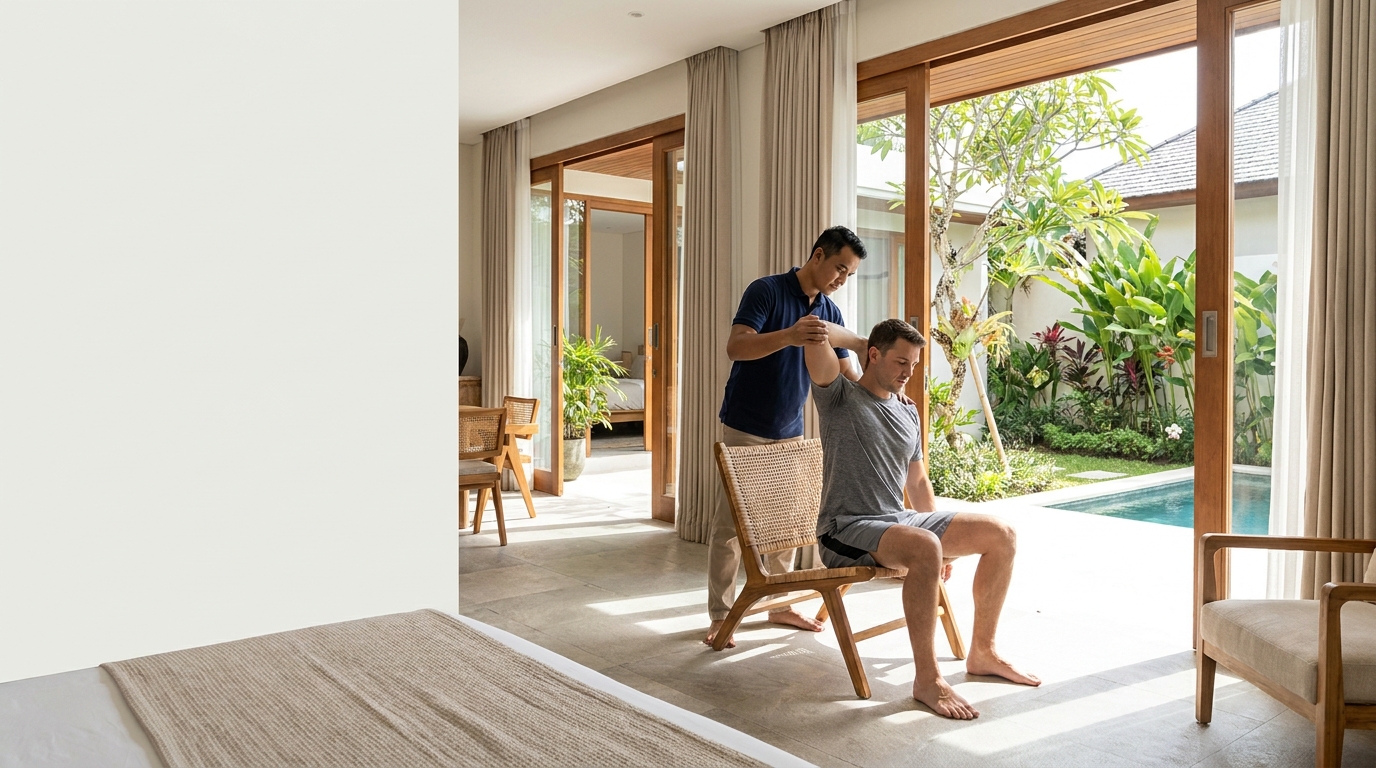
Airplane seats force your upper spine into a rounded posture. Opening up your thoracic spine relieves neck, shoulder, and upper back stiffness.
How to do it: Lie on your side with your knees bent at 90 degrees and arms extended in front of you, palms together. Keeping your knees stacked on the floor, slowly rotate your top arm and open your chest toward the ceiling, letting your head follow your hand. Exhale as you open, hold for 3 seconds, and return. Perform 8 repetitions per side.
4. Gentle Walking & Decompression
One of the most effective ways to restore circulation after a long flight is simple, low-impact walking. Take a 15-to-20-minute walk around your villa garden, resort, or a quiet beach path in Sanur or Nusa Dua. Focus on natural arm swing and upright posture without carrying heavy bags.
What to Avoid Immediately After Landing in Bali
When travelers feel stiff, they often try to force their body back into shape too quickly. To prevent acute muscle spasms or overuse injuries, avoid these common mistakes during your first 24 to 48 hours in Bali:
Avoid Aggressive Surfing or Heavy Lifting Immediately: High-impact loading when your stabilizers are fatigued and dehydrated increases the risk of lower back strains and shoulder impingement.
Avoid Extreme Static Stretching: Forcing cold, dehydrated muscles into deep static stretches can cause micro-tears and increased protective guarding.
Avoid Deep "Bone-Cracking" Manipulation: Unregulated or excessively aggressive massage when your spine is sensitized from travel can irritate spinal joints rather than relieve tension.
How Private In-Villa Physiotherapy Supports Your Bali Recovery
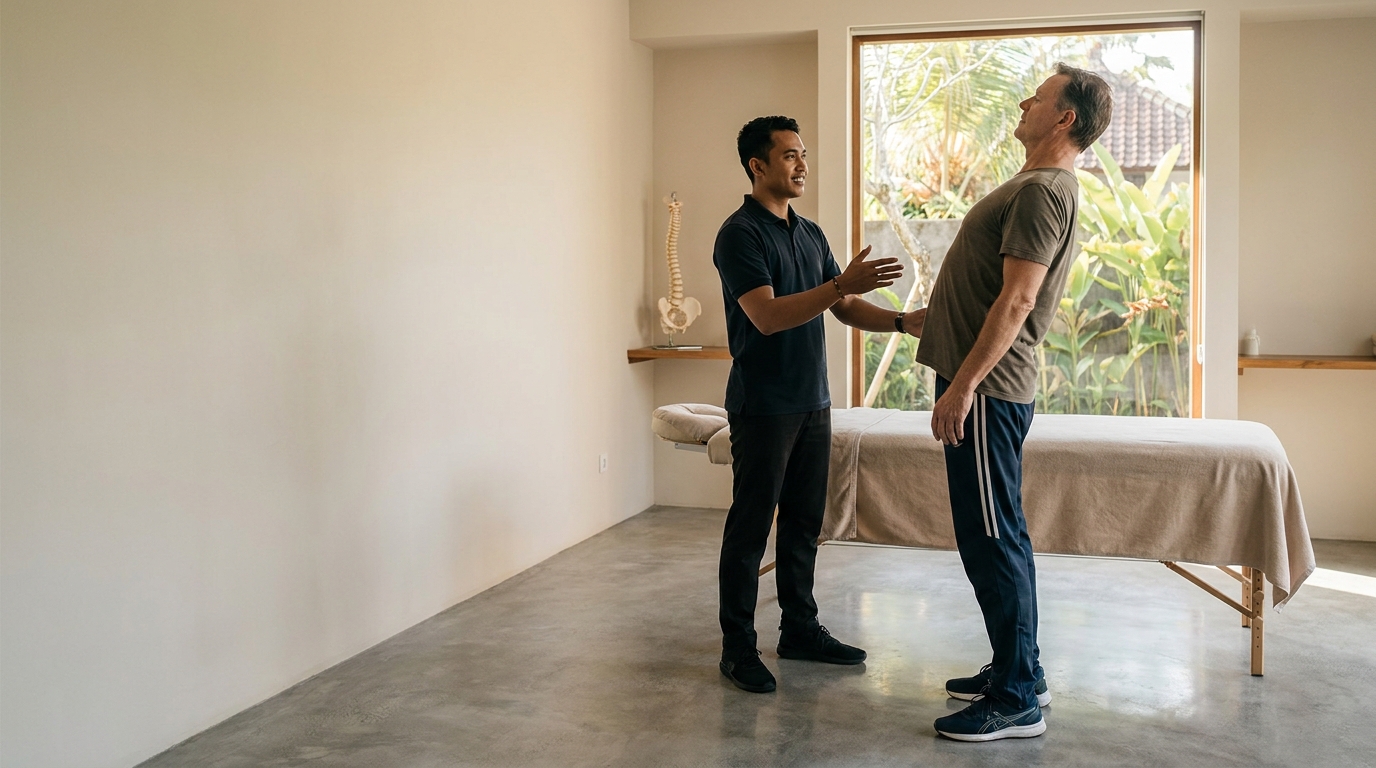
If post-flight stiffness does not improve with gentle movement, or if you experience sharp lower back pain, hip catching, or persistent travel fatigue, a professional physiotherapy assessment can make a significant difference.
Traveling across Bali in traffic to visit a clinic is the last thing you want when your body is aching. This is why in-villa physiotherapy in Bali offers a practical and relaxing alternative. A qualified physiotherapist brings structured clinical care directly to your villa, hotel, or private residence.
During a home visit or in-villa session, your physiotherapist will assess your joint mobility, identify specific movement restrictions, and provide hands-on soft tissue therapy, joint mobilization when appropriate, and tailored therapeutic exercises. Whether you are staying in Denpasar, Sanur, Ubud, Canggu, Seminyak, or Nusa Dua, private care allows you to recover comfortably in your own space.
Start Your Bali Stay with Better Movement
Your time in Bali should be spent enjoying the island, training, exploring, or unwinding—not feeling limited by post-flight back pain and stiff hips. By taking time for gentle mobility work, staying well-hydrated, and listening to your body's recovery timeline, you can overcome travel fatigue safely and naturally.
If you need personalized assessment and guided recovery in the comfort of your accommodation, explore our home visit physiotherapy services or book a private consultation with Rehat Physio Bali today.