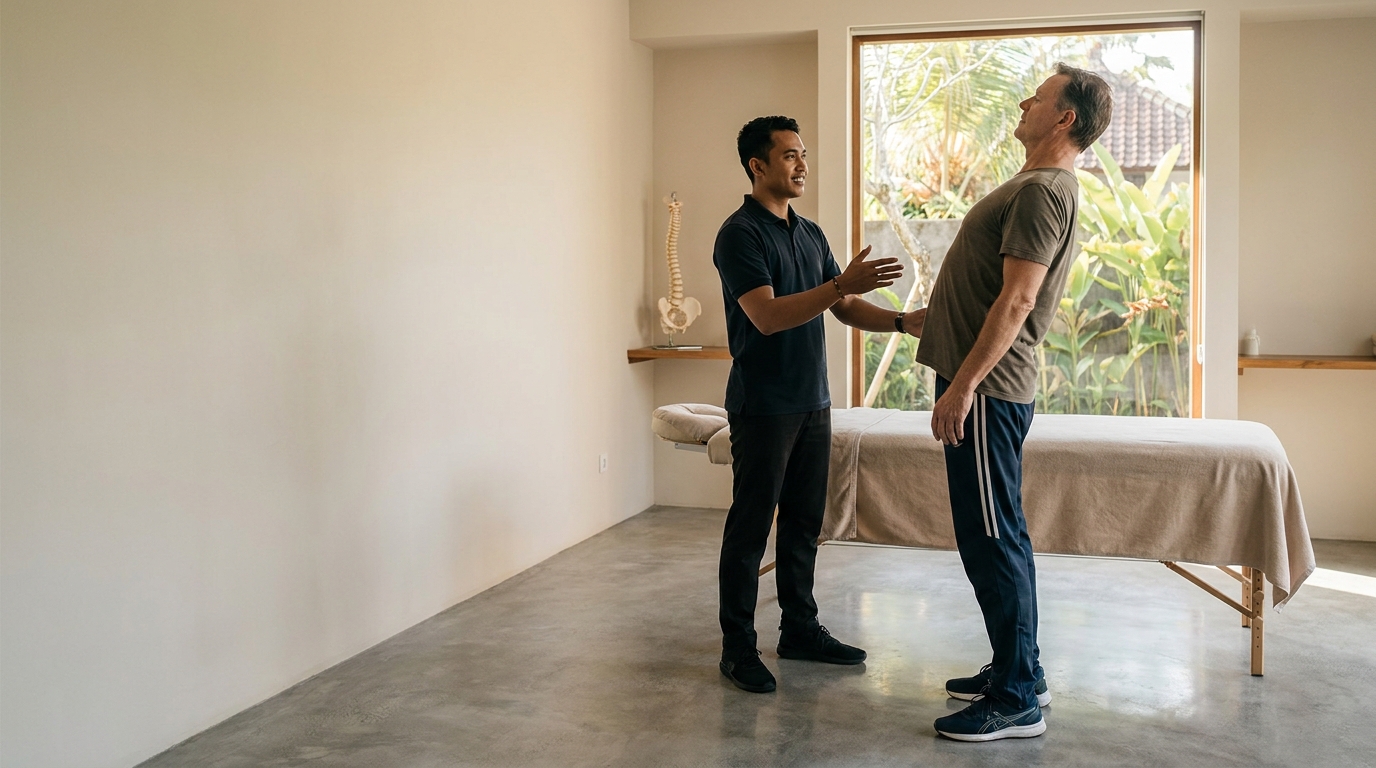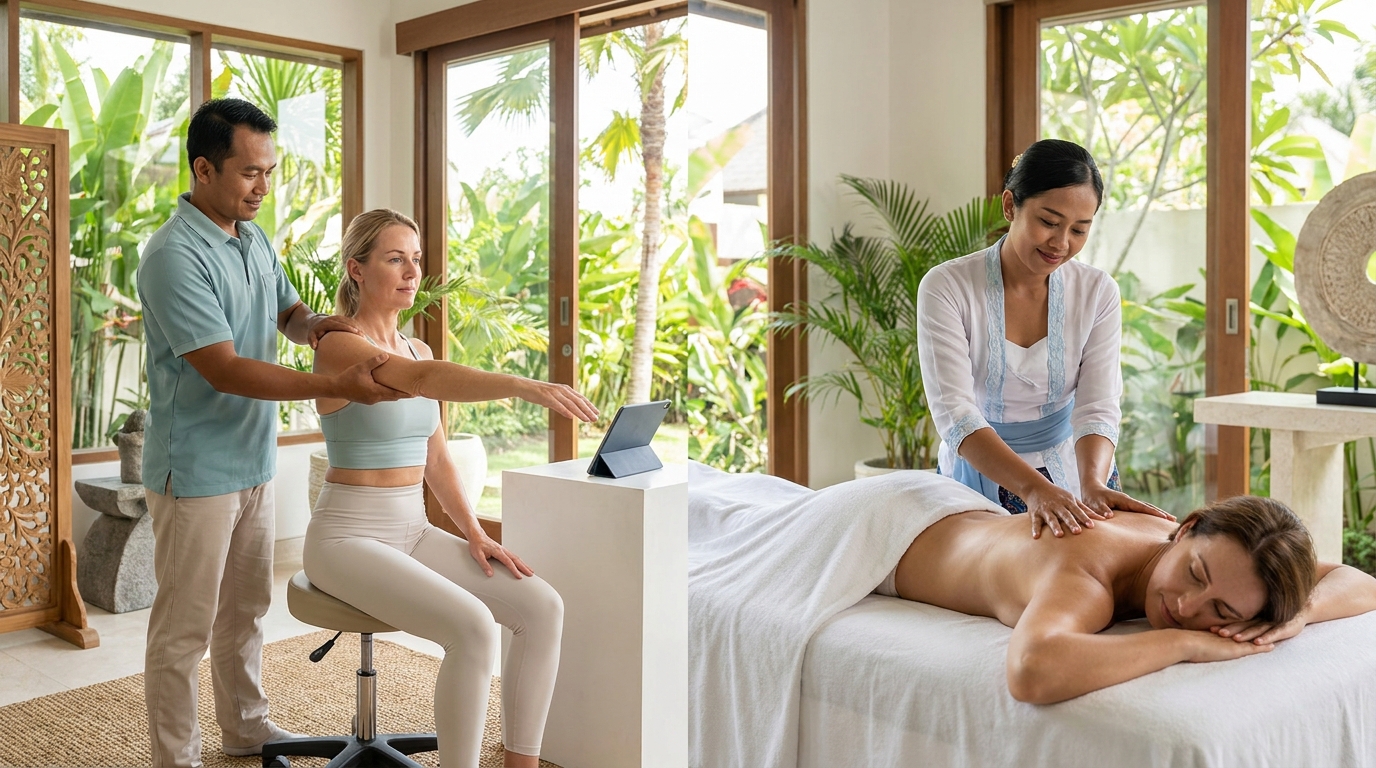
Many people use the terms physiotherapy and massage therapy interchangeably, but they are not the same service. While both can help people feel better, they have different goals, techniques, and outcomes.
If you're staying in Bali and dealing with muscle tightness after a long flight, recovering from a sports activity, or simply noticing stiffness from working remotely, understanding the difference can help you choose the support that best matches your needs.
The right choice depends on what your body is experiencing. In some situations, massage therapy may be enough to help you relax. In others, physiotherapy offers a more structured approach focused on improving movement, function, and long-term recovery.
What Is Physiotherapy?
Physiotherapy is a healthcare profession focused on restoring movement, improving physical function, and supporting recovery after injury, pain, surgery, or mobility limitations. Rather than treating only the area that feels uncomfortable, a physiotherapist looks at how the entire body moves and identifies factors that may be contributing to the problem.
Treatment is tailored to each individual and may include movement assessment, posture analysis, mobility exercises, strength training, manual therapy, education, and guidance for daily activities.
The goal is not simply to reduce symptoms but to help improve how your body moves and functions over time.
What Is Massage Therapy?
Massage therapy primarily focuses on soft tissues such as muscles and connective tissue. Different massage techniques are used to promote relaxation, reduce muscle tension, improve circulation, and encourage general wellbeing.
Many people choose massage after long travel days, demanding work schedules, or physically active holidays because it can leave the body feeling lighter and more relaxed.
While massage may temporarily ease muscle tightness or soreness, it does not usually include a clinical assessment of movement patterns, joint function, muscle imbalances, or rehabilitation planning.
Physiotherapy vs Massage Therapy: The Main Differences
Although there is some overlap between the two services, their objectives are different.
Assessment
A physiotherapy session typically begins with a detailed assessment. Your physiotherapist asks about your symptoms, medical history, activity level, daily routine, and recovery goals before evaluating posture, joint mobility, muscle strength, flexibility, and movement quality.
Massage therapy generally focuses less on movement assessment and more on addressing areas of muscle tension or discomfort identified by the client.
Treatment Goals
Physiotherapy aims to support recovery, improve function, restore mobility, and reduce the likelihood of recurring issues through personalized rehabilitation.
Massage therapy is usually intended to promote relaxation, reduce muscle tightness, and improve comfort.
Exercise and Rehabilitation
Exercise is an important part of physiotherapy. A personalized exercise program helps strengthen weak muscles, improve stability, increase flexibility, and encourage healthier movement patterns.
Massage therapy typically does not include structured rehabilitation exercises or progressive recovery planning.
Long-Term Movement
If discomfort keeps returning because of poor posture, repetitive work, or movement habits, physiotherapy addresses these contributing factors through education and guided movement.
Massage therapy may help relieve symptoms, but additional rehabilitation may be needed if underlying movement issues remain.
When Physiotherapy May Be the Better Choice
Physiotherapy can be beneficial when your discomfort affects your movement, daily activities, work, or physical performance.
Situations where physiotherapy may be appropriate include:
Sports injuries
Joint pain
Neck or back discomfort
Reduced mobility
Muscle weakness
Post-surgical rehabilitation
Recovery after prolonged travel
Posture-related discomfort from desk work
Balance or movement concerns
Ongoing pain that keeps returning
For example, someone working remotely from a villa in Bali may develop neck stiffness and shoulder discomfort after spending long hours on a laptop. While massage may reduce muscle tension, physiotherapy can also assess workstation habits, posture, joint mobility, and muscle balance to provide a more comprehensive recovery plan.
When Massage Therapy May Be Enough
Massage therapy may be a suitable option when your primary goal is relaxation or temporary relief from general muscle tightness.
Examples include:
Feeling tense after a stressful week
Mild muscle soreness after recreational activities
General body fatigue
Relaxation during a wellness holiday
Tight muscles after sightseeing or extended walking
For many travelers, massage can be a pleasant way to unwind after exploring Bali. If symptoms improve quickly and do not affect movement or daily activities, massage alone may be appropriate.
However, if discomfort continues, becomes more frequent, or limits your activities, a physiotherapy assessment may help identify contributing factors.
Can Physiotherapy and Massage Therapy Work Together?
Yes. In many cases, physiotherapy and massage therapy can complement one another.
Massage may help reduce muscle tension and prepare the body for movement, while physiotherapy focuses on improving strength, mobility, coordination, and movement quality.
For example, someone recovering from a recreational surfing injury in Bali may benefit from physiotherapy to guide rehabilitation while also using massage occasionally to help manage muscle tightness during recovery.
The combination depends on the individual's condition, goals, and professional recommendations.
Recovery Needs Can Change During Your Stay in Bali
Many visitors arrive in Bali after long international flights, busy work schedules, or physically demanding holidays. Some spend weeks working remotely, while others participate in hiking, surfing, diving, cycling, or gym training.
These activities can place different demands on the body.
A person who initially seeks massage for sore muscles may later discover that limited hip mobility, poor posture, or reduced shoulder movement is contributing to recurring discomfort. In these situations, physiotherapy offers a more personalized approach that considers how the body moves as a whole.
Private physiotherapy sessions can also be convenient for villa guests, hotel guests, expats, and digital nomads who prefer professional care without traveling to a clinic.
Choosing the Right Support for Your Goals
The best choice depends on what you hope to achieve.
If your goal is relaxation, temporary muscle relief, or wellness support, massage therapy may be an excellent option.
If you are recovering from an injury, experiencing recurring discomfort, noticing movement limitations, or looking to improve posture and mobility, physiotherapy provides a more comprehensive assessment and personalized recovery strategy.
Neither approach is universally better than the other. Instead, they serve different purposes, and understanding those differences allows you to make a more informed decision about your health.
If you're unsure whether your symptoms would benefit from physiotherapy, Rehat Sejenak Physiotherapy Rehab offers personalized assessments and private in-villa or home visit physiotherapy services across Bali. Whether you're recovering from travel, managing posture-related discomfort, or working toward better mobility, our team can help you understand your movement needs and create a recovery plan that fits your lifestyle. Learn more or arrange a consultation.