Bali is globally renowned for its world-class swells, drawing surfers from all corners of the globe to breaks like Uluwatu, Canggu, and Keramas. Spending hours paddling, arching your back, and popping up demands an incredible amount of work from your musculoskeletal system. It is incredibly common to head back to your villa or hotel feeling a deep ache across your lower back.
However, not all back discomfort is created equal. While a mild ache often indicates that your muscles worked hard, a sharper or radiating sensation might point toward a nerve-related issue. Distinguishing between normal muscle fatigue and a structural issue like a pinched nerve is essential for long-term spinal health and getting back out to the lineup safely.
The Biomechanics of Surfing and Spinal Stress
To understand why the lower back is so vulnerable during surfing, we have to look at the repetitive movements involved. When you paddle out, your spine goes into sustained hyperextension. You maintain an arched position, forcing the muscles along your spine to contract continuously while your neck looks forward.
This sustained extension places a heavy mechanical load on both the lumbar muscles and the intervertebral discs. When you transition into a pop-up, your spine rapidly shifts from extension to flexion and rotation. If your core stability is compromised or your hips lack mobility, your lower back absorbs the brunt of this force. Over a long session, this repetitive strain can result in either soft tissue fatigue or structural nerve irritation.
Signs of Surfing Muscle Fatigue
Muscle fatigue is a natural response to physical exertion, especially if you are tackling challenging conditions or surfing more frequently than usual during a trip to Bali.
Localized Aching and Stiffness
Fatigue typically presents as a dull, generalized ache across the lower back muscles. It usually affects both sides of the spine relatively equally. You might feel a profound stiffness when waking up the next morning or when standing up after sitting at a café.
Gradual Improvement with Rest and Movement
A key indicator of muscle fatigue is how it responds to gentle care. This type of discomfort usually peaks within 24 to 48 hours, often referred to as delayed onset muscle soreness, and gradually resolves. Light walking, gentle stretching, and adequate hydration generally help improve mobility and ease the tension. The pain does not travel down into your legs or change when you change your head position.
Identifying a Pinched Nerve
A pinched nerve, or lumbar radiculopathy, occurs when structural tissue, such as a bulging disc or an inflamed joint, compresses or irritates a nerve root exiting the spinal cord. This requires a more cautious approach to recovery.
Sharp, Radiating Pain
Unlike the dull ache of fatigued muscles, a pinched nerve often produces a sharp, shooting, or electric shock-like sensation. This discomfort rarely stays localized to the lower back. It frequently travels down through the gluteal region, into the back of the thigh, and sometimes even past the knee into the calf or foot.
Altered Sensation and Neurological Signs
Nerve compression alters the signals traveling to and from your brain. If a nerve root is irritated, you might experience persistent numbness, a "pins and needles" tingling sensation, or a feeling that one leg is noticeably weaker when you try to stand or walk. These symptoms are often unilateral, meaning they affect only one side of the body.
Changes with Specific Postures
Nerve-related discomfort is highly sensitive to changes in spinal positioning. Sitting down or bending forward to tie your shoes can increase the pressure on the discs, causing the radiating pain to worsen. Conversely, standing up straight might offer temporary relief, or in some specific nerve presentations, worsen it if the space where the nerve exits is narrowed.
A Quick Comparison Checklist
To help analyze what you might be feeling while resting at your accommodation, consider these distinct characteristics:
For Muscle Fatigue:
The sensation is a dull, heavy ache or tight stiffness.
The location is centralized across the lower back muscles on both sides.
It improves with gentle movement, light walking, and warm showers.
It lacks any numbness, tingling, or radiating sensations.
For a Pinched Nerve:
The sensation is sharp, burning, or electric.
The location radiates from the back down into the hip, thigh, or foot, usually on one side.
It is aggravated by prolonged sitting, bending forward, or sudden movements.
It may be accompanied by numbness, tingling, or localized muscle weakness.
Safe Strategies for Initial Relief and Recovery
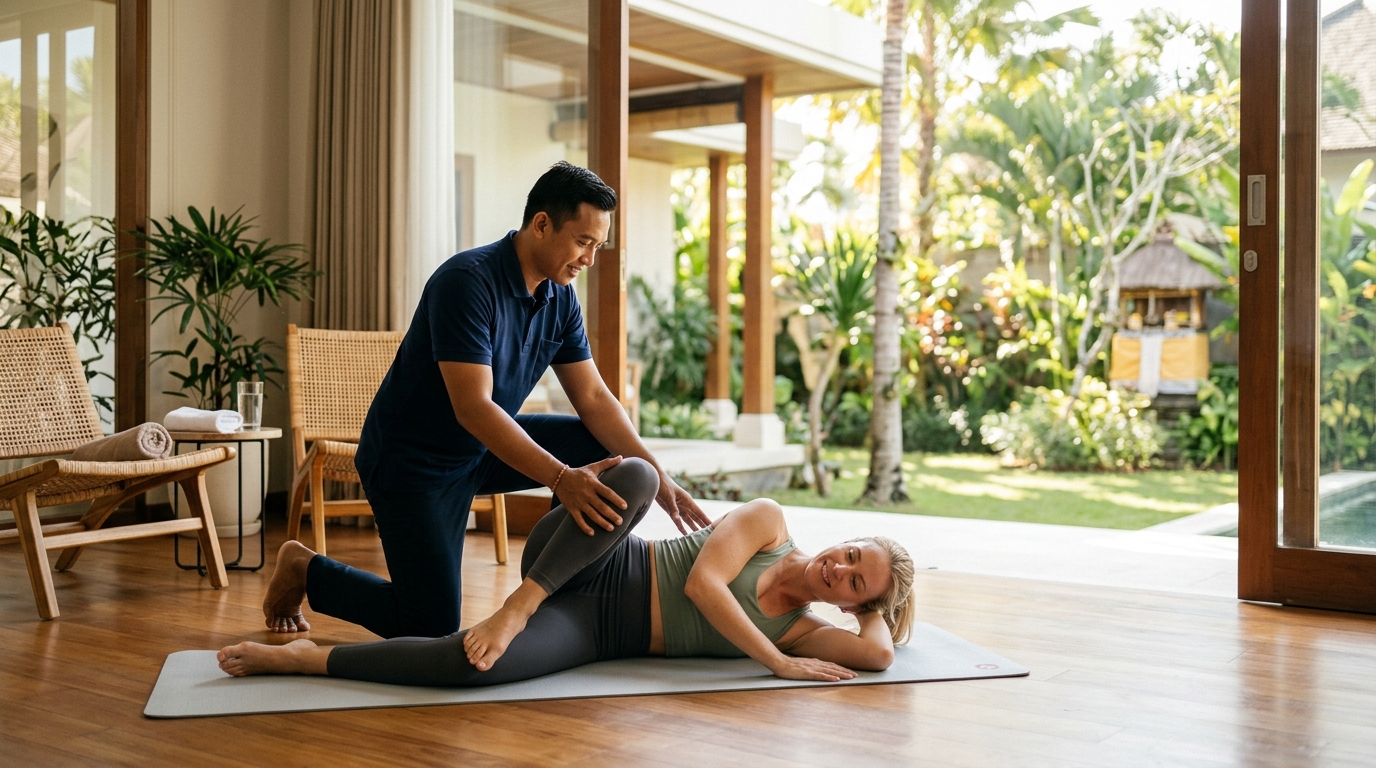
If your symptoms align more closely with muscle fatigue, focusing on muscle recovery Bali styles can help restore your comfort. Prioritizing rest for a day or two away from the surfboard is a practical first step. Applying a warm compress can help soothe tight tissues, while gentle mobility exercises like the cat-cow stretch or a supported child's pose can gently reintroduce movement without overworking the spine.
If you suspect nerve irritation, it is vital to avoid aggressive stretching. Twisting the spine or touching your toes can increase nerve compression and prolong inflammation. Instead, try to maintain a neutral spine. Avoid low, soft couches that cause your back to round, and opt for supportive seating.
When to Seek Professional Support
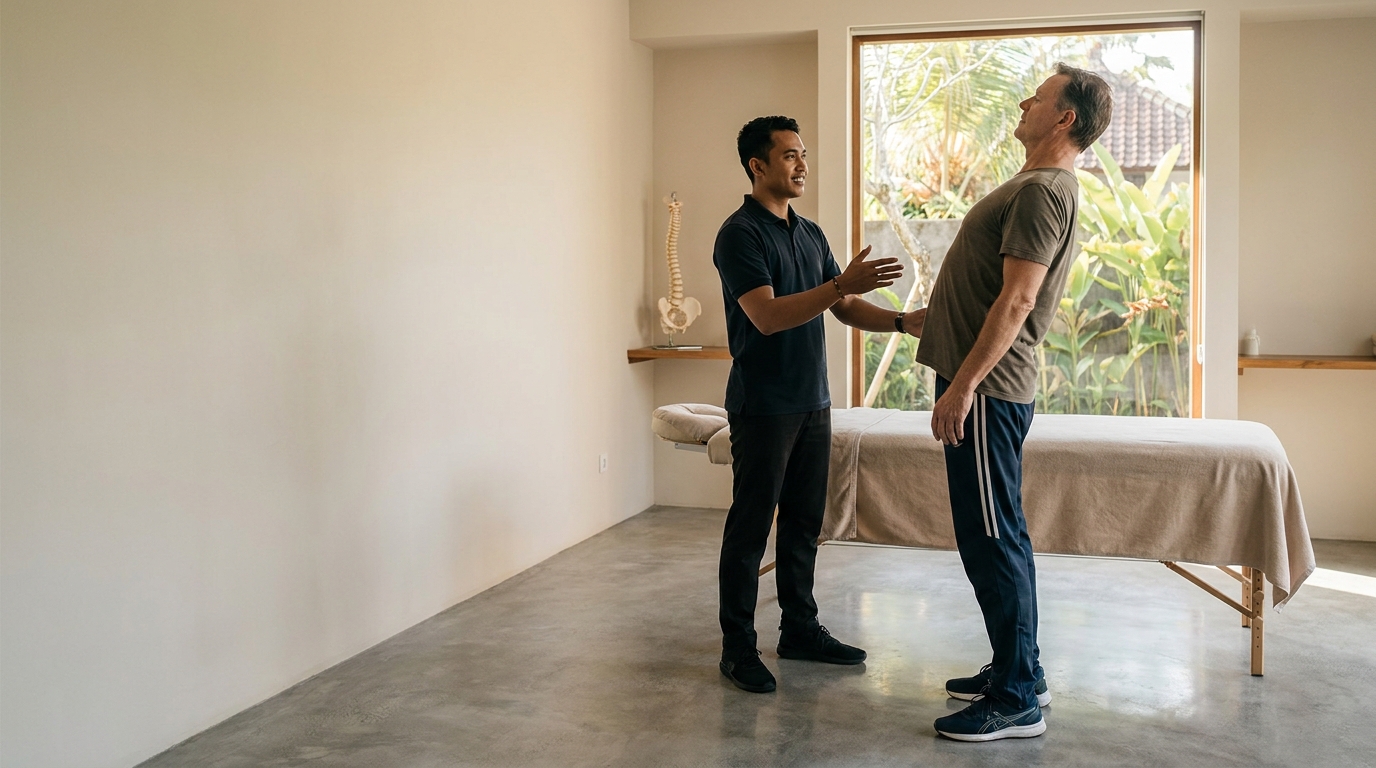
While many mild back issues resolve with basic rest, persistent discomfort can disrupt your daily life, your travel plans, and your time in the water. Seeking a professional posture analysis Bali consultation or a comprehensive movement assessment can help identify the underlying imbalances contributing to your pain.
You should consult a healthcare professional if your back pain does not begin to improve after a few days of rest, if the discomfort wakes you up at night, or if you experience any progressive weakness in your legs. A physiotherapist can provide personalized guidance to safely support recovery and help improve mobility, ensuring you return to activities without re-injury.
Please note that if you experience a sudden loss of bowel or bladder control, or progressive numbness in the groin area, this constitutes a medical emergency, and you should seek immediate medical attention at a hospital.
Personalized Physiotherapy Support for Surfers in Bali
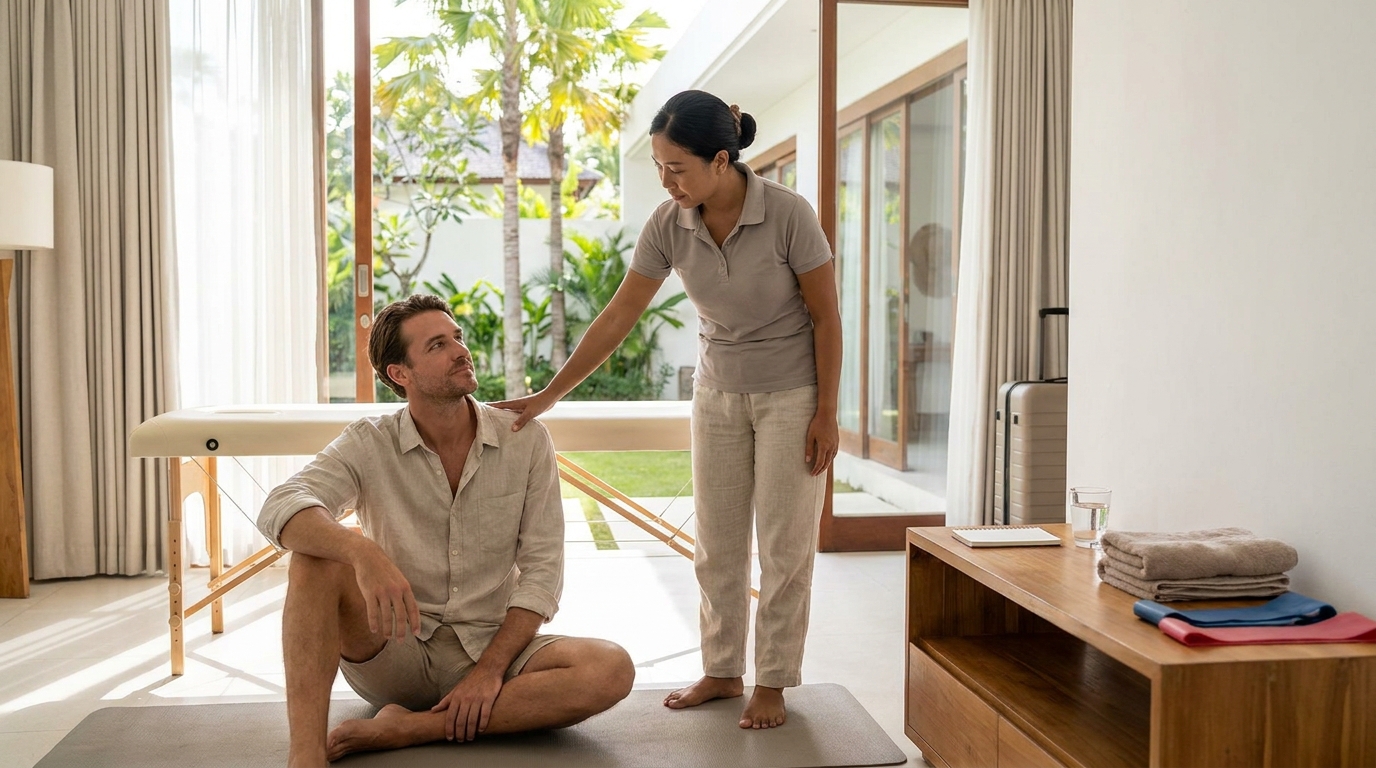
Recovering from a demanding surf session does not have to mean spending your day traveling to a clinic while dealing with back stiffness. Rehat Sejenak Physiotherapy Rehab offers dedicated, private care tailored to help you manage physical strain effectively.
Whether you are managing acute muscle fatigue from consecutive days in the water or seeking targeted sports injury recovery Bali solutions for deeper nerve discomfort, a professional assessment can make a significant difference. Our team provides specialized home visit physiotherapy Bali services, bringing expert care directly to your accommodation. Through careful movement analysis, manual techniques, and targeted exercise prescription, we focus on safe pain relief Bali strategies and mobility recovery Bali goals designed to protect your spine.
If you want to understand your symptoms better and receive personalized care without leaving your accommodation, visit our website at https://rehatphysio.com/ to learn more about our private services or to schedule an in-villa physiotherapy Bali session today.