Bali invites people to move. Temple staircases, coastal walks, jungle paths, rice terrace trails, and volcano hikes are part of many itineraries. For travelers, expats, and active visitors, that activity can feel rewarding until the knees start complaining the next morning.
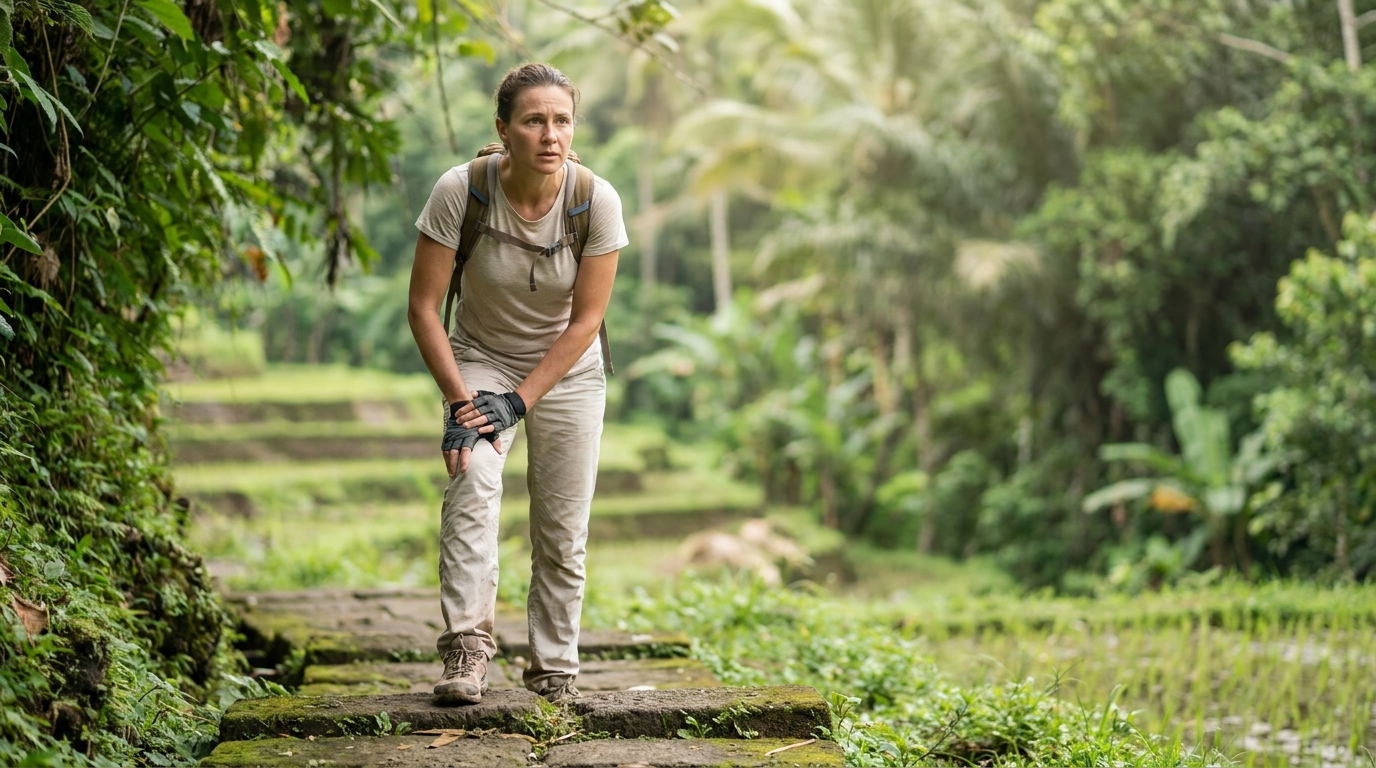
Knee pain after hiking in Bali is common, especially when the day includes steep descents, uneven ground, long walking hours, or sudden increases in activity. The good news is that many cases improve with early care, smarter movement, and the right recovery support. The key is knowing what may be happening and when professional assessment is useful.
Why Hiking in Bali Can Stress the Knees
Hiking here is rarely a flat, even path. Trails around Ubud, Campuhan Ridge, Mount Batur, coastal cliffs, and countryside villages often include uneven stones, muddy sections, stair-like terrain, and sudden changes in incline.
These surfaces ask more from the knees than a regular city walk. Your joints absorb force with every step downhill. Your hips and ankles help control balance. If either area is stiff or weak, the knees may take on extra load.
Travel can add to the problem. Long flights, limited sleep, unfamiliar footwear, humid heat, and a packed sightseeing schedule may leave the body less prepared for a demanding hike. Someone who is usually active at home may still feel sore after a full day of walking in Bali because the terrain and volume of movement are different.
Common Causes of Knee Pain After Hiking
Not every knee ache means a serious injury. Still, understanding the likely sources can help you respond more carefully.
Muscle Fatigue and Overuse
Long walks, repeated stair climbing, and downhill control can fatigue the quadriceps, hamstrings, calves, and hip stabilizers. When those muscles tire, the kneecap and surrounding soft tissues may become irritated.
Patellofemoral Irritation
Pain around or behind the kneecap often appears after descending slopes or stairs. Travelers may notice discomfort when sitting for long scooter rides, standing up from a low chair, or walking downhill the next day.
Soft Tissue Strain
Sudden slips on wet stone, awkward landings, or twisting on uneven ground can strain ligaments or surrounding tissues. Mild sprains may still allow walking, but the knee can feel unstable, swollen, or tender.
Hip or Ankle Mobility Limits
If the hips or ankles do not move well, the knees often compensate. This is especially relevant for people who sit for long workdays before traveling, then jump into hiking without gradual preparation.
Footwear and Load
Worn-out shoes, sandals with poor grip, or carrying a heavy backpack can change how force travels through the legs. On Bali trails, footing matters as much as fitness.
Early Steps That May Help After a Painful Hike
If your symptoms are mild and you can still walk with reasonable comfort, simple early strategies may support recovery:
Reduce hiking and long downhill walks for a few days
Use relative rest rather than complete inactivity when possible
Ice for short periods if the knee feels warm or irritated
Elevate the leg when swelling is present
Keep gentle mobility within a comfortable range
Choose flatter walking routes while symptoms settle
Avoid deep squats, lunges, or forcing through sharp pain
Gentle movement is often better than staying completely still, especially if stiffness increases with prolonged rest. Short, easy walks, light range-of-motion exercises, and careful pacing can help many travelers stay mobile without aggravating the knee.
If pain is sharp, worsening, or linked to significant swelling, locking, giving way, or an inability to bear weight, seek medical assessment promptly rather than waiting it out.
When Physiotherapy May Be Useful
Physiotherapy can be helpful when knee discomfort affects walking, stairs, sightseeing, work, or sleep, or when symptoms keep returning after activity.
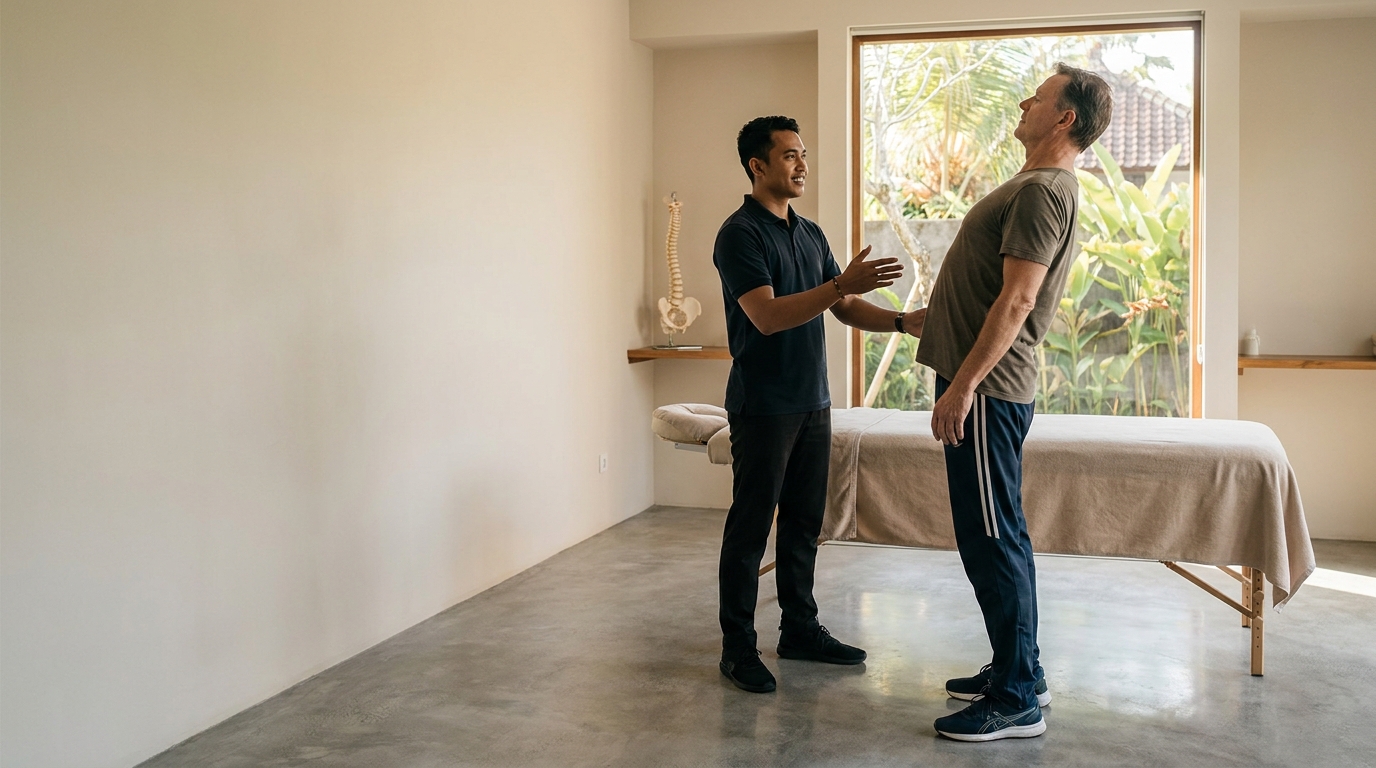
A physiotherapy assessment typically looks beyond the painful spot. Your physiotherapist may review how you walk, squat, climb stairs, and control your hips and ankles. That information helps identify whether the issue is mainly local irritation, overload, mobility restriction, strength imbalance, or a combination of factors.
Support may include:
Movement and gait assessment
Manual therapy where appropriate
Guided mobility work for the hip, knee, and ankle
Strengthening for the quadriceps, glutes, and supporting muscles
Advice on activity progression while traveling
Education on footwear, pacing, and recovery habits
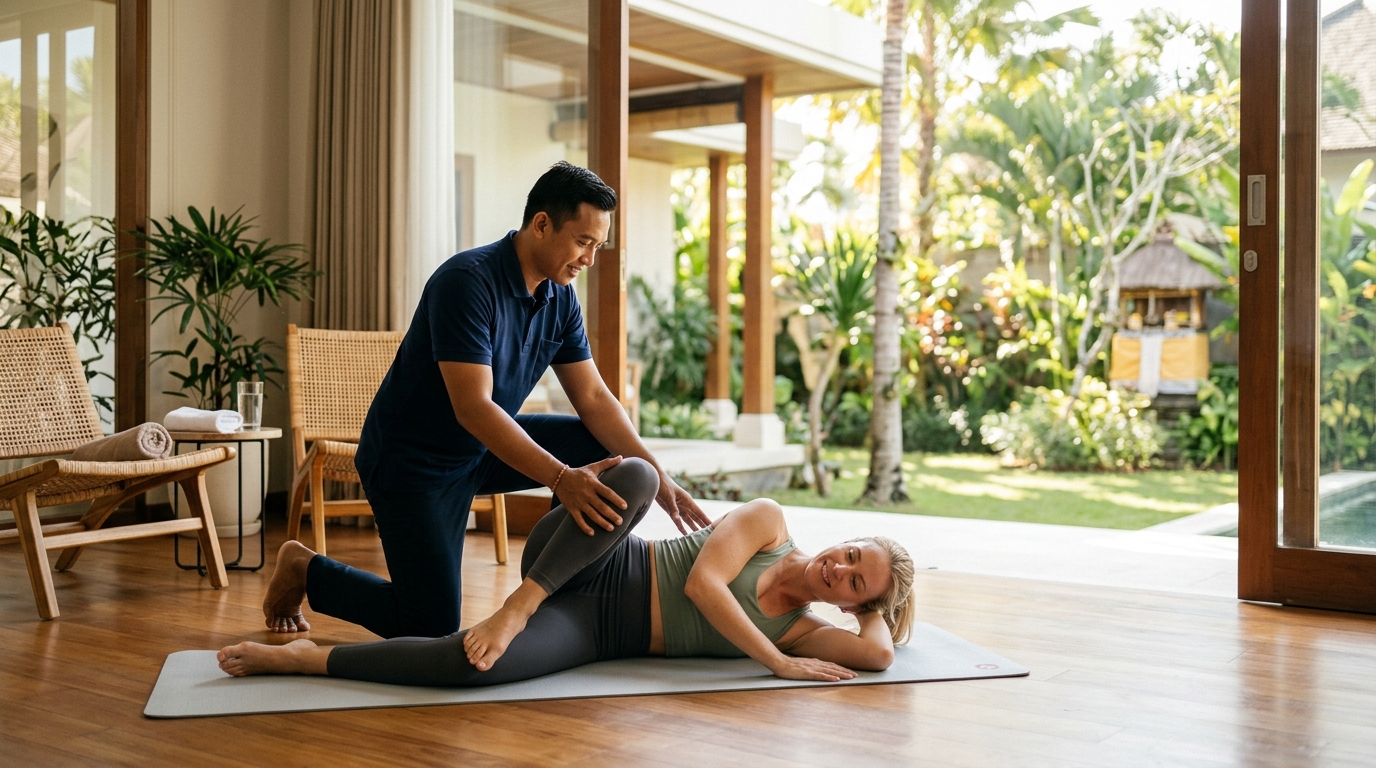
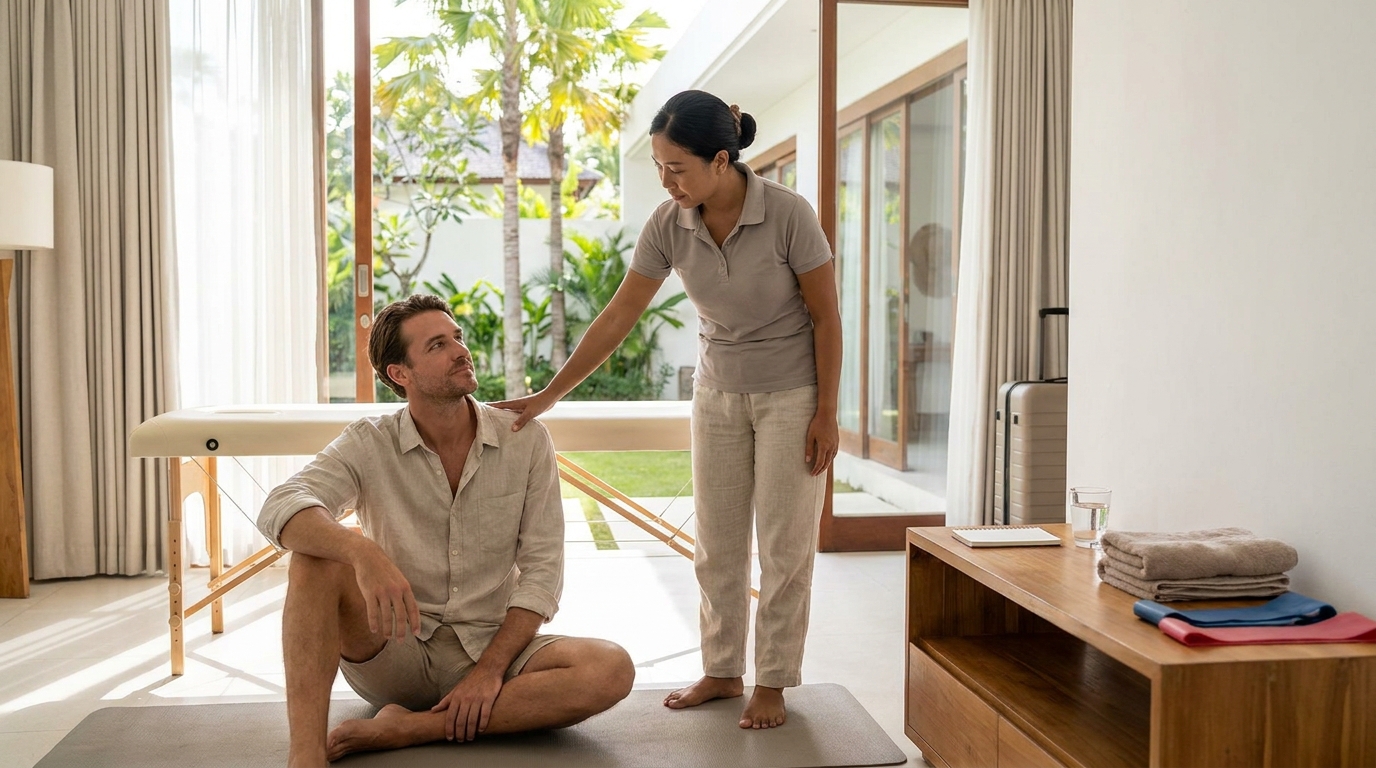
For visitors staying in villas or hotels, private in-villa physiotherapy can be especially practical. Instead of traveling across traffic while the knee is irritated, care can come to your accommodation and be adapted to your space, schedule, and mobility level.
How to Keep Enjoying Bali Without Overloading Your Knees
Recovery does not always mean canceling the rest of your trip. It often means adjusting how you move so your knees can settle while you continue enjoying Bali more comfortably.
Helpful adjustments include:
Alternating active days with lighter recovery days
Choosing flatter coastal walks before returning to steep trails
Using trekking poles on longer descents if available
Warming up with easy walking before harder hikes
Building hip and thigh strength gradually rather than suddenly
Respecting early warning signs instead of pushing through sharp pain
Travelers who work remotely between excursions should also watch sitting posture and prolonged inactivity. A stiff hip from desk work one day and a volcano hike the next can be a demanding combination for the knees.
Who This Guide Is Especially Relevant For
This kind of knee discomfort often shows up in:
Travelers after Mount Batur or countryside treks
Villa guests exploring Ubud temple and rice terrace walks
Digital nomads mixing desk work with weekend hiking
Active visitors returning to sport after long flights
Expats increasing walking volume during busier weeks
Your recovery needs depend on your history, fitness, symptoms, and how the knee responds over the next few days. Mild soreness that settles with rest and careful movement is different from pain that limits walking or keeps returning with every outing.
Support Your Recovery Where You Are Staying
Knee pain after hiking does not have to define the rest of your time in Bali. With early pacing, sensible activity changes, and professional guidance when needed, many people return to comfortable walking and outdoor plans more confidently.
If your knee still feels limited, swollen, unstable, or repeatedly sore after trails and stairs, Rehat Sejenak Physiotherapy Rehab offers private home visit and in-villa physiotherapy across Bali. A personalized assessment can help clarify what your body needs and guide safer recovery around your travel or work schedule. Learn more or arrange a consultation.